 Pin This
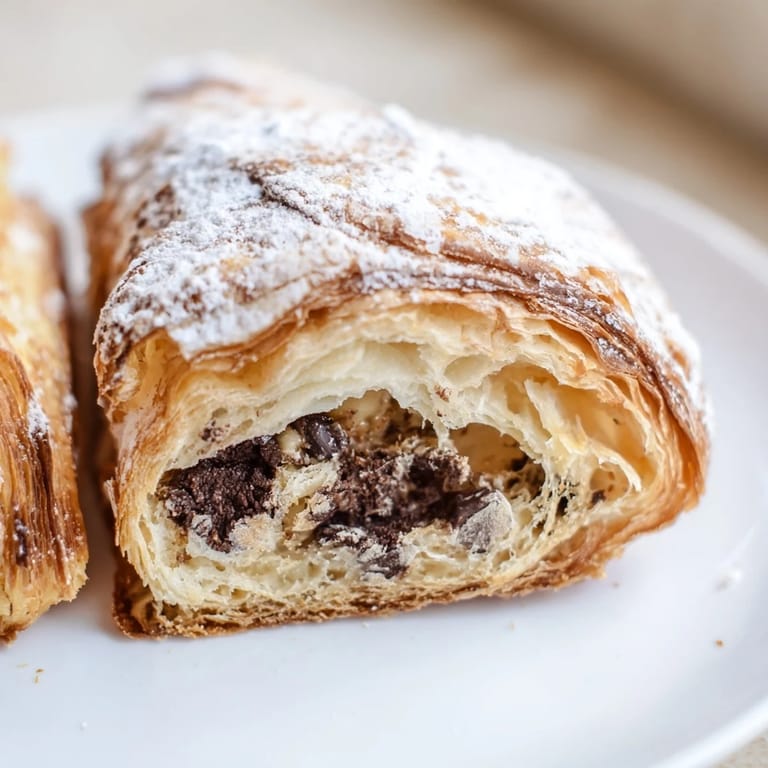
 I discovered these by accident on a Tuesday morning when I had leftover croissants and an urge to make cookie dough. Instead of choosing between the two, I wondered what would happen if they met in the middle. The result was so unexpectedly good that my partner came into the kitchen following the smell and ate one still warm from the oven before I could even plate it properly. That's when I knew I'd stumbled onto something special.
I made these for my neighbor's daughter's sleepover party, thinking they'd be a fun midnight snack. What actually happened was the girls abandoned their movie to gather in the kitchen, watching through the oven window like it was the most important thing happening. When they came out golden and steaming, they devoured them so fast I had to make a second batch the next morning. That kitchen moment—all that anticipation and joy—is exactly why I keep coming back to this recipe.
Ingredients
- All-butter croissants (6 large, fresh or day-old): The foundation of everything—look for ones that are still slightly crispy on the outside because they'll hold the cookie dough without collapsing.
- Unsalted butter (90 g, softened): Room temperature is key here; cold butter won't cream properly and you'll end up with a dense dough instead of something light and spreadable.
- Light brown sugar (100 g) and granulated sugar (50 g): The combination gives you moisture and depth; don't skip the brown sugar just to simplify things.
- Large egg (1) and vanilla extract (1 tsp): These bind everything and add a subtle warmth that makes people ask what your secret ingredient is.
- All-purpose flour (150 g), baking soda (1/2 tsp), and fine sea salt (1/4 tsp): Weigh the flour if you can; scooping and leveling is fine too, but weight keeps things more consistent.
- Semi-sweet chocolate chips (120 g): I fold these in last so they stay whole and don't get crushed into the dough, giving you those distinct melty pockets.
- Egg wash (1 beaten egg) and icing sugar (optional): The egg wash creates that beautiful golden sheen, and the icing sugar at the end feels a little celebratory.
Tired of Takeout? 🥡
Get 10 meals you can make faster than delivery arrives. Seriously.
One email. No spam. Unsubscribe anytime.
Instructions
- Set the stage:
- Preheat your oven to 180°C and line a baking sheet with parchment paper. This gives you everything ready so you're not scrambling while the croissants get warm.
- Build your cookie base:
- Cream the butter and both sugars together until it looks light and a little fluffy, maybe 2 or 3 minutes. This aerates the dough and makes the finished cookie texture tender.
- Bring it together:
- Add the egg and vanilla, mixing until everything is combined and smooth. This is where the dough starts to come alive and smell like actual cookies.
- Fold in the dry ingredients:
- Sift the flour, baking soda, and salt together, then gently fold them in just until you don't see any white streaks. Overmixing here makes things tough, so show restraint even though you want to keep stirring.
- Add the chocolate:
- Fold in the chocolate chips carefully, keeping them whole. You want distinct pockets of chocolate, not a muddy dough.
- Prepare the croissants:
- Slice each croissant horizontally but stop short of cutting all the way through—you're aiming for a natural hinge so they open like a little book. Go slowly and let the knife do the work.
- Fill with intention:
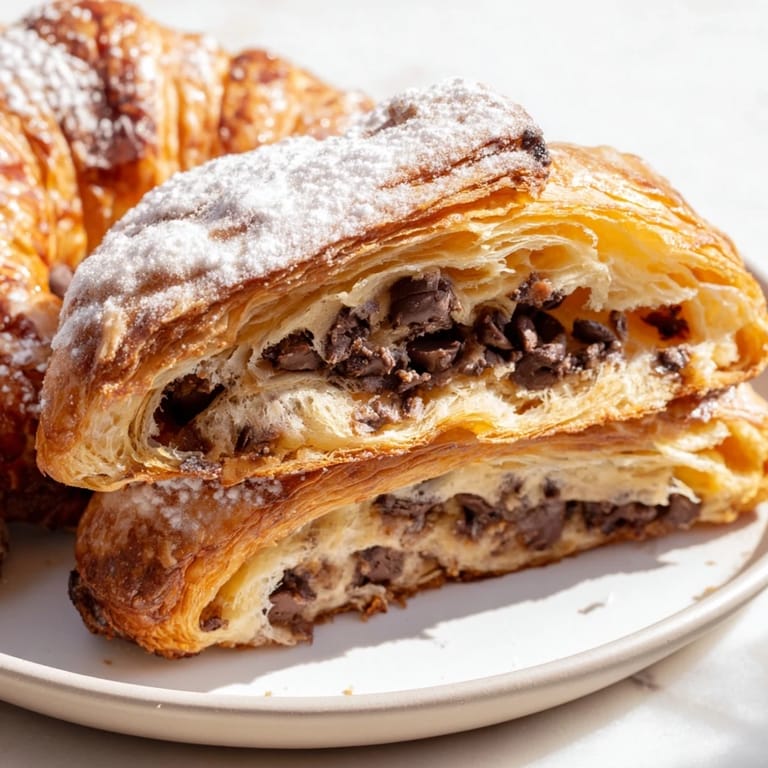
- Spoon 2 or 3 tablespoons of cookie dough into each croissant, gently pressing it so it spreads evenly without crumbling the pastry. The dough will expand as it bakes, so don't overstuff.
- Finish with shine:
- Close each croissant gently and brush the top with beaten egg. This creates that glossy, golden finish that makes them look bakery-quality.
- Bake to perfection:
- Bake for 16 to 18 minutes until the croissants are deeply golden and the cookie dough inside feels set but still soft when you gently press. Trust your instincts—if they're pale, give them another minute or two.
- The cool-down:
- Let them rest for a few minutes so the filling sets slightly, then dust with icing sugar if you want that extra touch. Serve while they're still warm because that's when the magic really happens.
 Pin This
 I'll never forget the moment I realized these could be served warm with a scoop of vanilla ice cream melting into the crevices. It transformed what was already delicious into something genuinely memorable, the kind of thing people ask you to make again weeks later. That's when food stops being just breakfast or dessert and becomes a small moment of joy.
The Cookie Dough Formula
The ratio of butter to sugar to flour in this dough is specifically balanced so it bakes through without spreading too much inside the croissant or staying raw in the center. I've tried adjusting it before and learned quickly that more butter means it leaks out the sides, while less means it gets dense and cookie-like rather than that perfect tender texture. The baking soda is crucial too—it helps the dough set in the short baking time without overdrying it. Think of it as the difference between dough and fully baked cookie, meeting somewhere in between.
Timing and Temperature Matter
The 18-minute window is specific because you want the croissant fully baked and golden while the cookie dough inside stays soft enough that you can still sink your teeth into it without it being raw. If your oven runs hot, start checking at 15 minutes; if it runs cool, you might need the full 18. I've also discovered that opening the oven door to peek actually helps you dial this in better than setting a timer and hoping.
Variations and Personal Touches
Once you have the basic technique down, this recipe becomes a playground for your preferences. I've made versions with dark chocolate when I wanted something less sweet, added a tablespoon of espresso powder to deepen the chocolate flavor, and once even swapped in white chocolate chips with dried cranberries for a friend who loves that combination. The base is flexible enough to handle your creativity without falling apart.
- Try toasted walnuts or hazelnuts folded into the dough for a nutty richness that plays beautifully with chocolate.
- A pinch of sea salt sprinkled on top before baking brings out the sweetness in an unexpected way.
- If you want something more decadent, brush the baked croissant with melted chocolate before dusting with icing sugar.
 Pin This
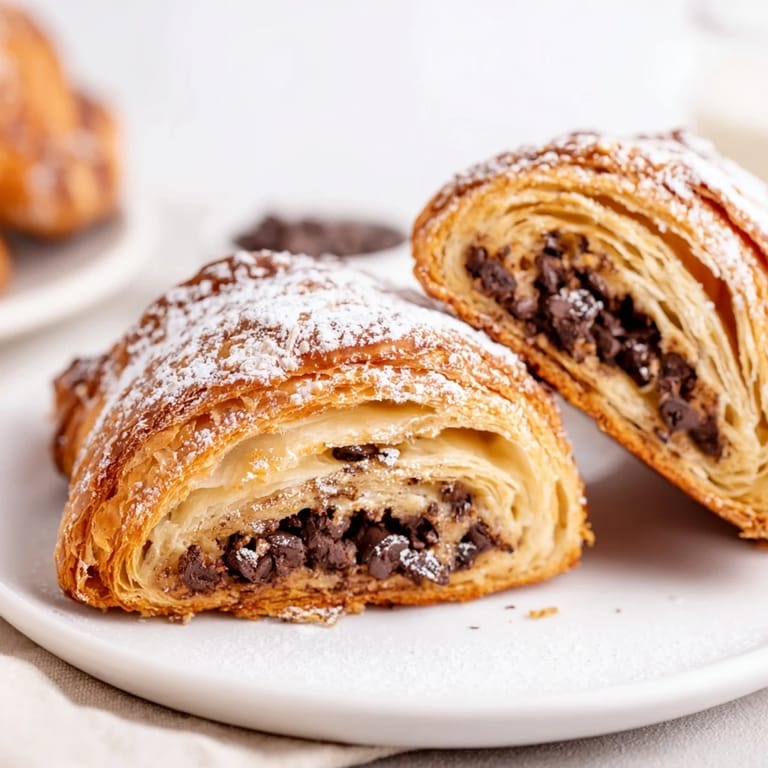
 These are best served warm and eaten fresh, though you can make the cookie dough up to 24 hours ahead and fill the croissants just before baking. There's something pure about biting into one while it's still steaming, watching the chocolate chips glisten in the morning light.
Recipe FAQ
- → Can I use day-old croissants for this?
Yes, day-old croissants work well as they hold the filling without becoming too soggy, enhancing the overall texture.
- → What types of chocolate chips work best?
Semi-sweet chocolate chips balance sweetness nicely, but you can substitute dark or white chocolate for different flavor profiles.
- → How do I keep the dough from leaking during baking?
Leaving a hinge while slicing the croissants helps contain the filling and brushing the tops with egg wash ensures a sealed surface.
- → Can nuts be added to the filling?
Chopped toasted walnuts or hazelnuts can be incorporated into the dough for added texture and a nutty twist.
- → How should these be served for best taste?
Serve warm to enjoy the gooey chocolate dough filling fully. A dusting of icing sugar or a scoop of vanilla ice cream enhances the indulgence.