 Pin This
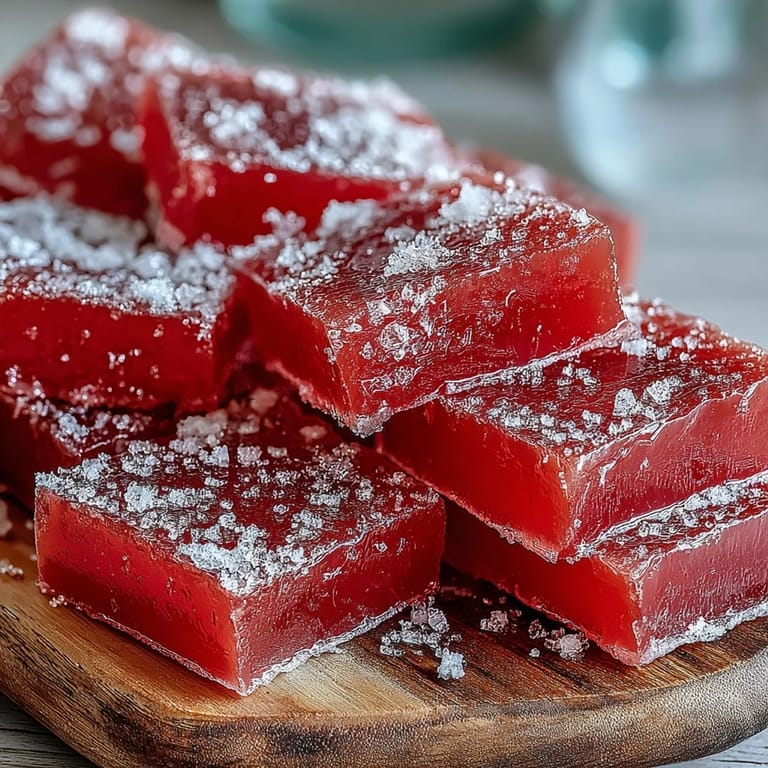
 My aunt's kitchen in Goa always smelled like something magical was happening on the stove—that particular moment when fruit transforms into something entirely different. She'd stand there with a wooden spoon, coaxing pink guava paste into this glossy, jewel-like confection that somehow tasted like sunshine and tropical breezes in a single bite. When she finally pressed it into the pan and let it cool, we'd all crowd around waiting, knowing that what emerged would be something we'd crave all year. This is guava cheese, and it's nowhere near what the name suggests—it's pure, concentrated guava joy.
I made this for a friend who'd never had it before, and watching her face light up when she bit into a piece was worth every minute of stirring. She couldn't quite believe something so velvety and tangy came from just guavas and lime—she kept asking if there was some secret ingredient I was hiding. There wasn't, which somehow made the moment even sweeter.
Ingredients
- Ripe guava (800 g): Pink or white varieties both work beautifully, though pink guavas tend to give you that stunning coral color that makes people stop and stare.
- Water (1/2 cup): Just enough to help the guavas soften without making them soupy.
- Granulated sugar (450 g): This is your backbone—the amount seems precise, but taste your guavas first; some are sweeter than others, so adjust if needed.
- Fresh lime juice (2 tbsp): The secret weapon that keeps this from tasting one-dimensional; it adds brightness that makes people ask what you did differently.
- Unsalted butter (2 tbsp): Added at the very end to give the paste that silky, glossy finish that makes it look professionally made.
- Superfine sugar (1/4 cup, optional): For dusting, if you want that jeweled, fancy look that makes it feel extra special.
Tired of Takeout? 🥡
Get 10 meals you can make faster than delivery arrives. Seriously.
One email. No spam. Unsubscribe anytime.
Instructions
- Prepare your pan:
- Butter an 8x8-inch square pan thoroughly and line it with parchment paper, letting the edges hang over the sides—this makes removing your finished paste infinitely easier and feels like you're setting the stage for something important.
- Cook the guavas:
- Drop your chopped guavas into a saucepan with the water and let them simmer over medium heat for about 15 minutes until they've completely softened and fallen apart. The kitchen will fill with this intoxicating tropical fragrance that makes you excited about what comes next.
- Make it smooth:
- Blend the cooked guavas until completely smooth, then push everything through a fine sieve to catch any stubborn seeds or fiber bits—this step separates silky paste from grainy paste, and it absolutely matters.
- Measure and return:
- You'll have more puree than you need, so measure out exactly 2 cups and put it back in a heavy-bottomed saucepan; this is important because cooking too much paste at once means uneven thickening.
- Cook down the mixture:
- Add your sugar and lime juice, then stir constantly with a wooden spoon over medium heat—this is where patience becomes your ingredient. Watch as the mixture gradually darkens, thickens, and starts to smell even more incredible than before.
- Watch for the moment:
- After 30–40 minutes, the paste will pull away from the sides of the pan and form a cohesive mass instead of sliding around; this is when you add the butter and keep stirring until everything becomes glossy and thick enough to hold its shape. Trust your instincts here—the transformation happens faster than you expect.
- Transfer while hot:
- Pour the steaming paste into your prepared pan and smooth the top with a spatula; work quickly because it sets fast, and you want that even surface.
- Let it rest:
- Leave it at room temperature for a full hour to cool and firm up—this is the hardest part because it smells so good you'll want to eat it immediately.
- Cut into pieces:
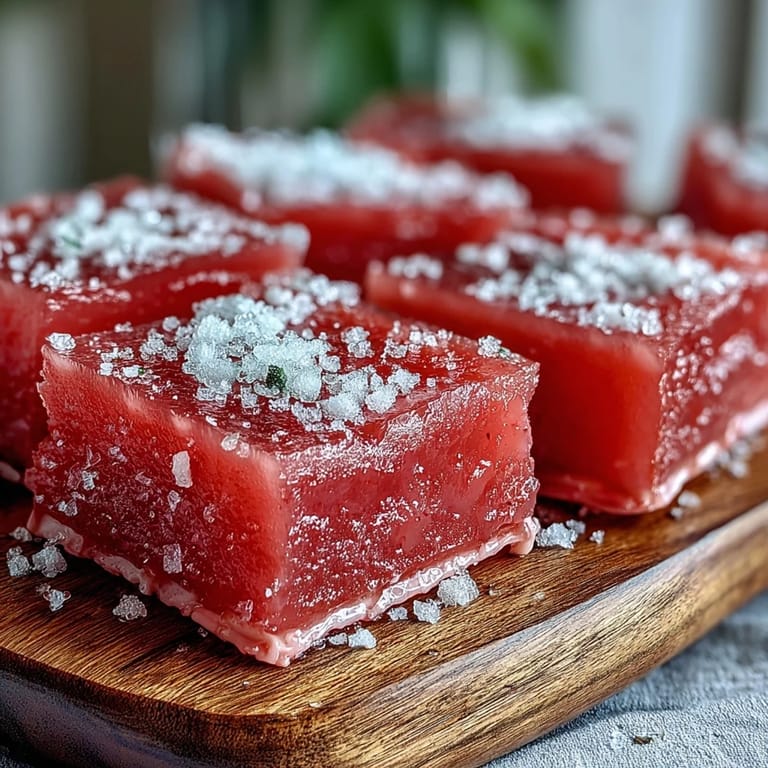
- Use the parchment overhang to lift the whole block out, then cut it into 1-inch squares with a knife you've greased with butter to prevent sticking; clean your knife between cuts for neat edges.
- Add sparkle (optional):
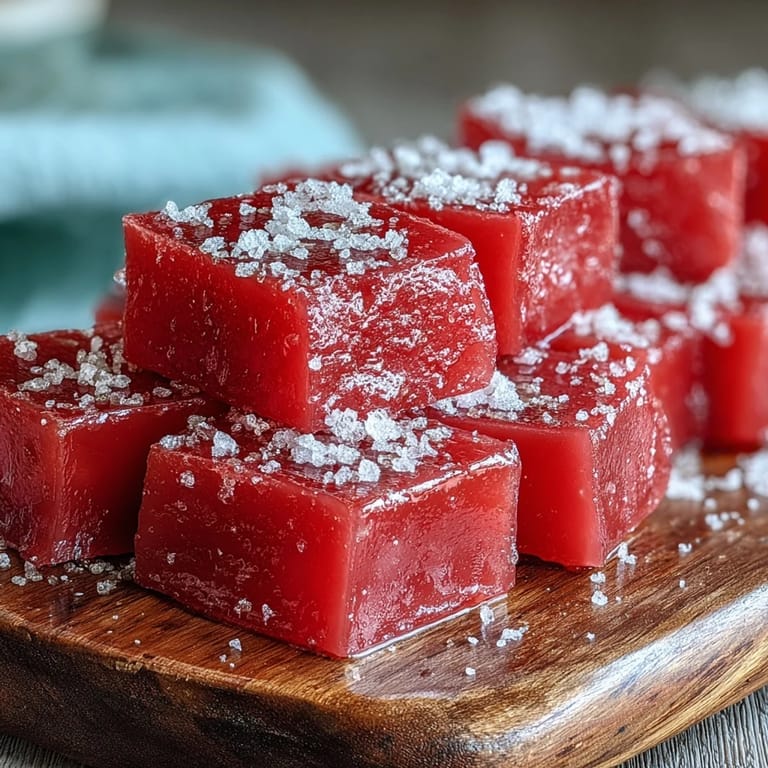
- If you want that finished look, roll each piece in superfine sugar until coated—it catches the light and makes these look like tiny jewels.
 Pin This
 My grandmother used to make this every monsoon season and give it away in little boxes tied with ribbon, and I finally understood why—it's not just candy, it's a gesture, something handmade that says you spent time thinking of someone. Now when I make it, I think of her hands stirring that pot and the way she never rushed the process, even when we were all hovering nearby, impatient.
Why This Works as a Gift
Guava cheese travels beautifully and looks intentional in a way store-bought sweets never do. It stays fresh for weeks, so there's no pressure to finish it immediately, and it pairs beautifully with afternoon tea, which makes gifting it feel sophisticated. People who receive it always ask how you made it, which gives you that lovely moment of explaining something you're proud of.
Texture and Temperature Matter
The cooking time determines whether your final product is firm and slice-able or soft and spoonable, so pay attention to what consistency appeals to you. If you like it firmer, cook it the full 40 minutes; if you prefer something softer and almost jammy, stop at 30 minutes. Cold paste firms up more than warm paste, so what feels slightly too soft in the pan might be perfect once cooled.
Storage and Serving Ideas
Keep these in an airtight container at room temperature, and they'll stay beautiful and fresh for up to two weeks—though they rarely last that long in my house. Serve them with tea, alongside soft cheeses on a dessert board, or honestly just eat them standing in your kitchen at odd hours like the treasure they are. Here's what I've learned works best:
- Pair each piece with a bite of mild cheese like queso fresco or fresh mozzarella for a flavor combination that surprises everyone.
- Store them in single layers separated by parchment if you're stacking them, so they don't stick together or crack.
- Let them come to room temperature before eating if you've stored them somewhere cool—the flavor is more intense and the texture more pleasant that way.
 Pin This
 There's something deeply satisfying about making candy that tastes like it came from somewhere far away, in your own kitchen. This is one of those rare recipes where the effort feels less like work and more like creating something small and perfect that people will remember.
Recipe FAQ
- → What makes guava cheese different from guava paste?
Guava cheese typically contains butter for a richer, creamier texture compared to traditional guava paste. The addition of lime juice adds brightness, and the final product has a fudge-like consistency rather than being purely fruit-based.
- → Can I use frozen guava for this confection?
Frozen guava works well if fresh isn't available. Thaw completely before cooking and adjust cooking time as needed since frozen fruit may release more liquid during the simmering process.
- → How do I know when the mixture is ready to set?
The mixture is ready when it thickens noticeably, pulls away from the pan sides, and forms a mass that holds its shape. A spoon drawn through should leave a clear trail that doesn't immediately fill back in.
- → Why strain the guava puree before cooking?
Straining removes remaining seeds and fibrous bits, ensuring a silky smooth final texture. This step is crucial for achieving the characteristic glossy, uniform appearance of authentic guava cheese.
- → What's the best way to store guava cheese?
Keep in an airtight container at room temperature for up to two weeks. The high sugar content acts as a natural preservative. For longer storage, refrigerate though the texture may become slightly firmer.
- → Can I make this dairy-free?
Substitute regular butter with vegan butter or coconut oil. The texture and setting properties remain similar, though coconut oil may add a subtle tropical note to the flavor profile.