 Pin This
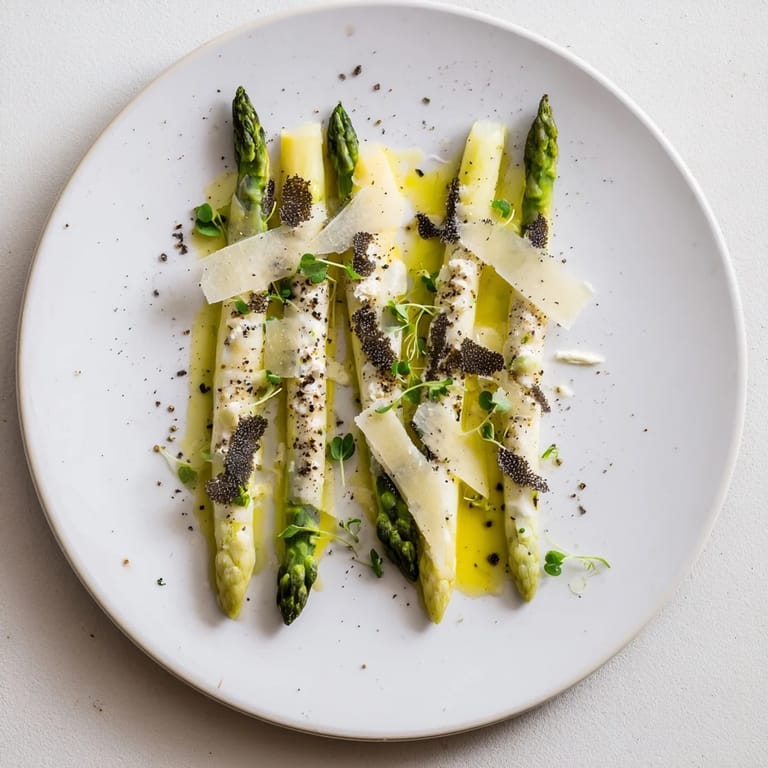
 The first time I made this dish, I was standing in a specialty market holding a truffle for what felt like an impossibly long time, wondering if I could actually justify the expense. But then I thought about how white asparagus has this almost ghostly elegance to it, and how a simple plate could become something memorable if I treated each ingredient like it deserved its own moment. That's when The Silver Birch came together in my mind—a plate that whispers rather than shouts, where pale layers of cheese and vegetable let the truffle do its quiet, luxurious work.
I made this for my partner on a quiet Thursday night when we both needed something that felt a bit fancy without the fuss of a full dinner. We sat with just this plate and a cold glass of wine, and the whole evening shifted. It became one of those meals you remember not for being complicated, but for how it made the moment feel a little more intentional.
Ingredients
- White asparagus, 500 g trimmed and peeled: Milder and more delicate than green asparagus, with a buttery quality when cooked gently. Peel them carefully to remove the tough outer layer, and the tender heart becomes almost silky.
- Burrata or buffalo mozzarella, 75 g drained: The creamy center is what makes this work—it pools slightly on the warm asparagus and creates a luxurious base for the truffle to rest on.
- Aged Comté cheese, 75 g thinly shaved: Its nutty, slightly sweet flavor bridges the gap between the mild asparagus and the assertive truffle without overwhelming either one.
- Parmigiano-Reggiano, 50 g finely grated: A whisper of umami that ties everything together and adds a subtle crystalline texture.
- Fresh black truffle, 15 g or truffle paste: If you can find it, fresh truffle is worth the splurge for the aroma alone—it fills your whole kitchen. Truffle paste works beautifully if fresh feels out of reach.
- Extra-virgin olive oil, 2 tbsp: Use something you genuinely love; it's one of only a few elements, so quality matters.
- Fresh lemon juice, 1 tbsp: Cuts through the richness and keeps the plate from feeling heavy, no matter how indulgent it looks.
- Flaky sea salt and white pepper: White pepper keeps the visual story clean—black specks would interrupt the pale elegance you're building.
- Microgreens or chervil for garnish: Optional, but they add a whisper of color and a peppery note if you want it.
Tired of Takeout? 🥡
Get 10 meals you can make faster than delivery arrives. Seriously.
One email. No spam. Unsubscribe anytime.
Instructions
- Prepare the asparagus with care:
- Bring salted water to a gentle simmer—you want it barely bubbling, not a rolling boil that'll roughen the delicate spears. Slip them in and watch the clock. After 8–10 minutes, they should bend gently but not flop, then plunge them into ice water immediately to lock in that tender-firm texture and keep their pale color.
- Compose the base:
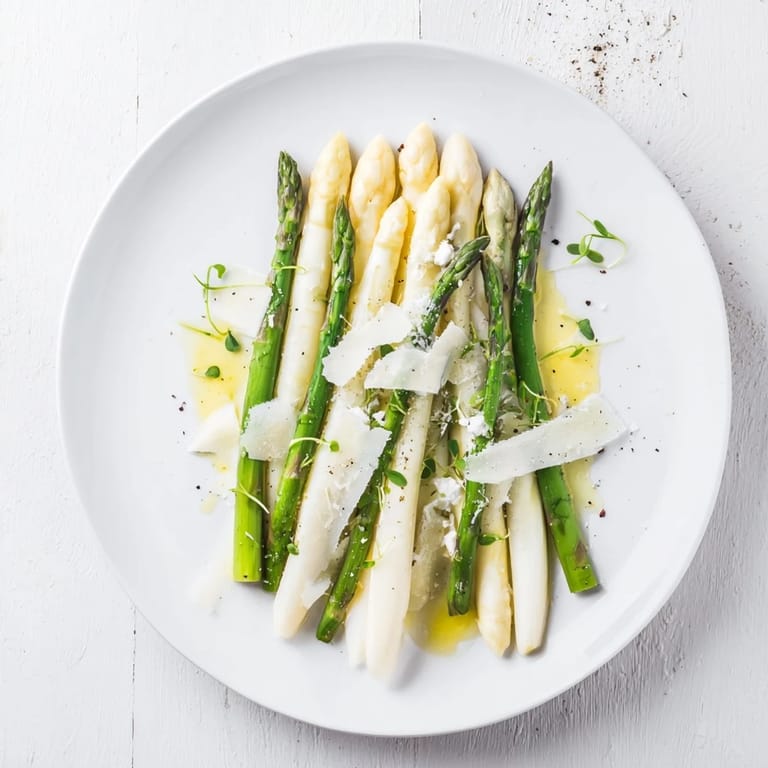
- Pat the cooled asparagus dry and slice each spear lengthwise. Arrange them in parallel lines on a cold plate—this isn't just technique, it's the foundation of how the dish looks and how it tells its story.
- Layer in the cheeses:
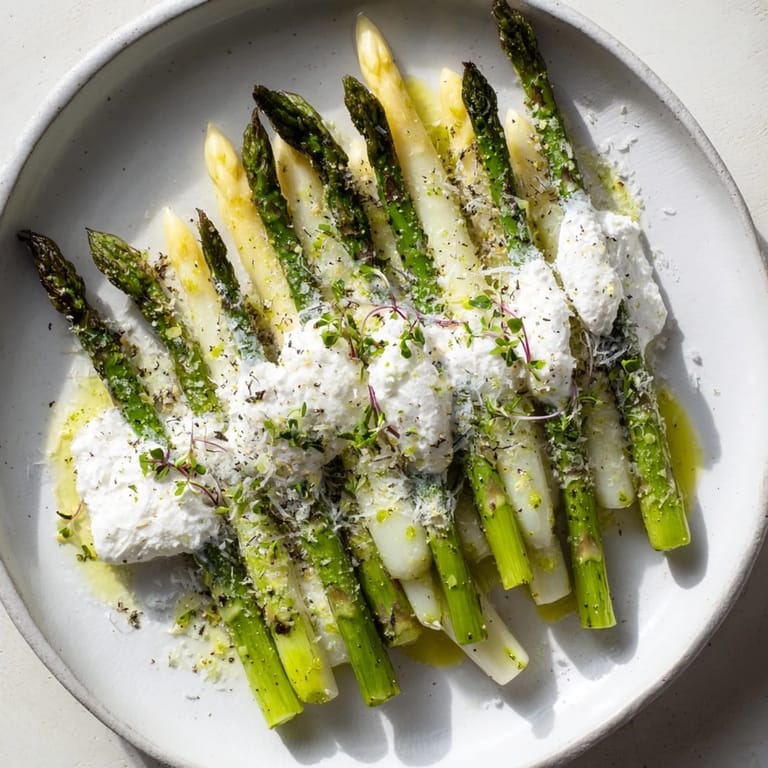
- Tear the burrata into pieces and scatter them directly on the warm asparagus so they soften into creamy pools. Add your Comté shavings next, then a fine snow of Parmigiano-Reggiano. Each cheese should feel like it has its own space.
- Add the truffle:
- If you have fresh truffle, use a slicer or sharp peeler to create thin, gossamer stripes that drape across the plate like something precious. If using paste, drizzle it in fine lines—less is more, and the smell will tell you when it's enough.
- Dress and finish:
- Whisk oil and lemon juice with salt and a pinch of white pepper, then drizzle it evenly so every element gets a bit. If you're using microgreens, scatter them now, then serve immediately while the asparagus is still cool and the burrata is still soft.
 Pin This
 The first time I served this to guests, someone picked up a fork, paused, and just looked at the plate for a moment. That pause—that's when I knew it wasn't just food anymore. It had become something worth admiring before eating, and that matters.
Timing and Temperature Matter
This dish lives in the space between warm and cold, and that temperature contrast is essential to how it tastes. The asparagus should be cool but not ice-cold, the cheese should be at room temperature so it softens slightly, and the plate should be chilled so nothing gets confused. If you rush the cooling or skip chilling the plates, the whole thing reads differently—less elegant, less intentional. I learned this the hard way by trying to serve it warm on a warm plate, and it turned into something mushy and forgettable.
Building Flavor Through Restraint
This is a dish that teaches you something about cooking if you let it. It's not trying to be everything at once. The asparagus is mild, the cheeses are refined, the truffle is bossy but used sparingly. Together, they create something that feels complete even though nothing is shouting. It's the opposite of the food I usually make—no layers of spice, no complicated technique—and somehow that's what makes it feel special. This is the kind of cooking that makes you slow down and actually taste what's on your plate.
Variations and Substitutions That Still Work
If Comté is hard to find, Gruyère brings a slightly earthier note that's equally lovely. A mild goat cheese can work too, though it'll shift the flavor profile toward something tangier. Even truffle oil drizzled into the dressing, when fresh truffle isn't in your budget, gives you that aromatic magic without the commitment. Don't feel locked into the exact ingredient list—respect the spirit of the dish (pale, elegant, intentional) and adjust what you need to.
- A few drops of truffle oil in the vinaigrette deepens the aroma without requiring expensive fresh truffle.
- If white asparagus is out of season, tender green asparagus works, though the visual story changes slightly.
- Room-temperature asparagus is acceptable if you're short on time, though the contrast between temperatures is part of what makes it sing.
 Pin This
 The Silver Birch isn't meant to fill you up—it's meant to make you feel noticed. Serve it when you want a moment to matter more than the meal itself.
Recipe FAQ
- → How should the white asparagus be prepared?
Simmer the peeled white asparagus in salted water for 8 to 10 minutes until tender yet firm. Immediately transfer to an ice bath to stop cooking, then drain and dry gently.
- → Can other cheeses be used instead of Comté?
Yes, Gruyère or a mild goat cheese can substitute for Comté if desired, maintaining the dish's creamy and savory profile.
- → What is the best way to add black truffle?
Use a truffle slicer or a sharp vegetable peeler to shave thin stripes of fresh black truffle. Alternatively, fine lines of quality truffle paste can be drizzled over the dish.
- → How is the dressing made?
Whisk extra-virgin olive oil, fresh lemon juice, flaky sea salt, and white pepper together, then drizzle evenly across the asparagus and cheeses for balanced brightness.
- → What garnishes complement this dish?
Microgreens or chervil add a fresh, delicate touch when sprinkled on top, enhancing visual appeal and flavor complexity.