 Pin This
 My friend Marco showed up at my kitchen door one April afternoon with a bundle of asparagus he'd picked up at the farmer's market, insisting we needed to do something special with the season's first green vegetables. We spent the next hour chopping, blanching, and experimenting until we landed on this bowl—something so bright and alive it felt like spring itself was sitting on the plate. The moment I drizzled that lemon dressing over everything, I realized this wasn't just a recipe; it was a way to celebrate the exact moment the weather turned warm again.
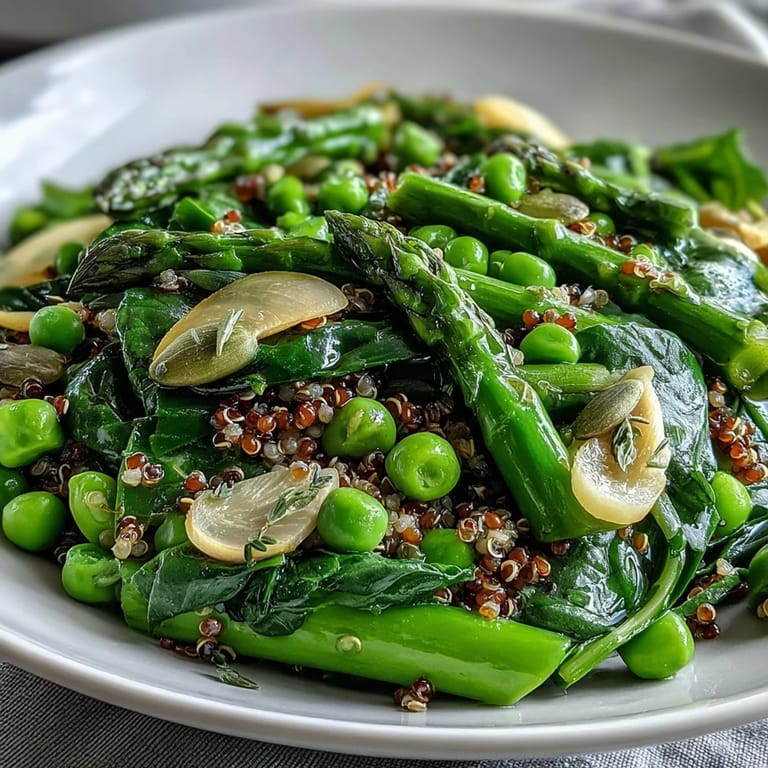
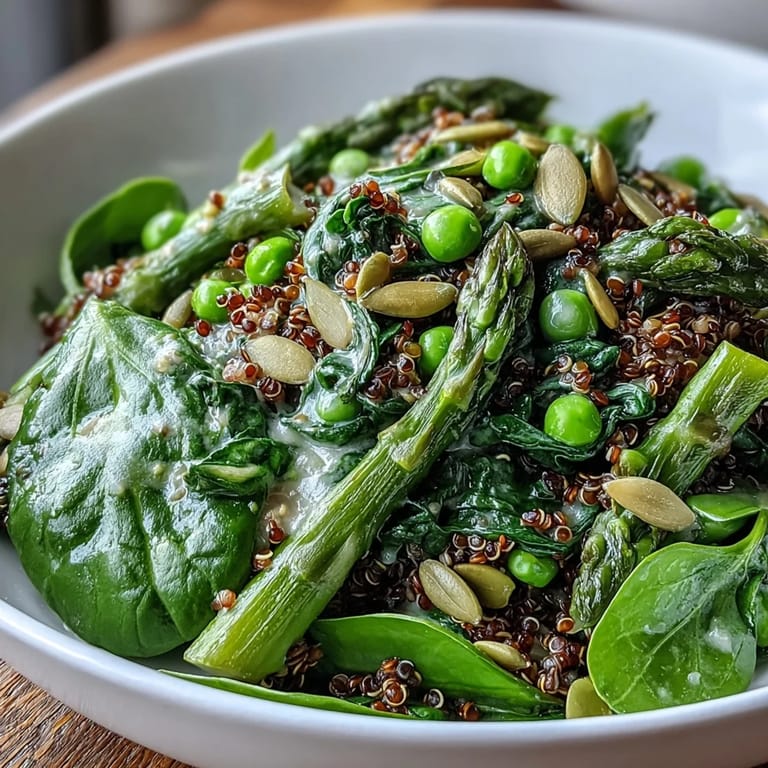
I made this for my mom during one of those rare afternoons when we had time to actually sit together and eat lunch slowly. She kept saying how the colors made her happy before she even tasted anything—the pale green peas, the deeper spinach, the golden-brown grains all arranged like edible art. That's when I understood that some meals are as much about what you see as what you taste.
Ingredients
- Quinoa, brown rice, or farro (1 cup): Pick whichever grain you have on hand or love most; they all work beautifully here and each brings its own texture to the bowl.
- Water (2 cups) and salt (½ tsp): The salt goes in the cooking water, not added later—this seasons the grains from the inside out.
- Fresh or frozen green peas (1 cup): Frozen peas are honestly just as good as fresh and sometimes more reliable; thaw them gently if you're using frozen.
- Asparagus (1 cup, cut into 2-inch pieces): The thinner spears cook faster and are more tender than the thick ones, so trim accordingly.
- Green beans (1 cup, cut into 2-inch pieces): Cut them to match the asparagus size so everything cooks evenly and looks intentional in the bowl.
- Baby spinach (2 cups): The tender leaves wilt down to almost nothing, so don't be shy with the quantity.
- Extra-virgin olive oil (3 tbsp): This is the foundation of your dressing, so use something you actually enjoy tasting on its own.
- Freshly squeezed lemon juice (2 tbsp) and lemon zest (1 tsp): Fresh lemon makes all the difference; bottled juice tastes thin by comparison.
- Dijon mustard (1 tsp): It's not about mustard flavor—it's an emulsifier that makes the dressing silky and helps it cling to the vegetables.
- Maple syrup or honey (1 tsp): Just a touch of sweetness to round out the acidity and balance the mustard's sharpness.
- Garlic clove (1 small, minced): Raw garlic in the dressing adds a gentle bite that wakes up every bite.
- Salt and black pepper: Taste as you go; you'll probably need more than you think.
- Toasted pumpkin or sunflower seeds (2 tbsp, optional): The crunch is essential for contrast, and toasting them yourself makes them taste infinitely better.
- Crumbled feta (¼ cup, optional): Tangy and salty, it complements the bright vegetables without overwhelming them.
- Fresh herbs like mint, parsley, or dill (chopped, optional): These are not afterthoughts—they're what makes the bowl feel alive and aromatic.
Tired of Takeout? 🥡
Get 10 meals you can make faster than delivery arrives. Seriously.
One email. No spam. Unsubscribe anytime.
Instructions
- Rinse and start your grains:
- Run your grains under cold water in a fine-mesh strainer, rubbing them gently between your fingers to rinse away any dust or debris. Bring 2 cups of salted water to a rolling boil, add your grains, stir once, then lower the heat and cover tightly with a lid.
- Let them simmer quietly:
- Quinoa usually takes about 15 minutes, but brown rice needs closer to 35, so check your package. You'll know they're done when all the water is absorbed and the grains are tender with just a tiny bit of bite left. Fluff everything with a fork and set it aside to cool slightly.
- Blanch the spring vegetables:
- While your grains cook, fill a large pot with salted water and bring it to a boil—the salt makes the vegetables taste better and keeps their color bright. Drop in the peas first and watch them float to the surface after about 2 minutes, then scoop them out with a slotted spoon into a bowl of ice water.
- Give each vegetable its moment:
- Do the asparagus next for 2-3 minutes until it's just tender enough to bend slightly, then the green beans the same way. The ice bath stops them from cooking any further and preserves that snappy texture that makes spring vegetables so worth celebrating.
- Wilt the spinach down:
- Heat a large skillet over medium heat with just a whisper of olive oil or even dry. Add your baby spinach in handfuls and let it collapse down for barely a minute—you want it soft but still a vivid green, not dull and sad.
- Build your dressing:
- In a small bowl, combine your olive oil, fresh lemon juice, zest, mustard, sweetener, and minced garlic. Whisk vigorously for a minute until it looks creamy and emulsified, then taste and adjust the seasoning until it makes you happy.
- Assemble with intention:
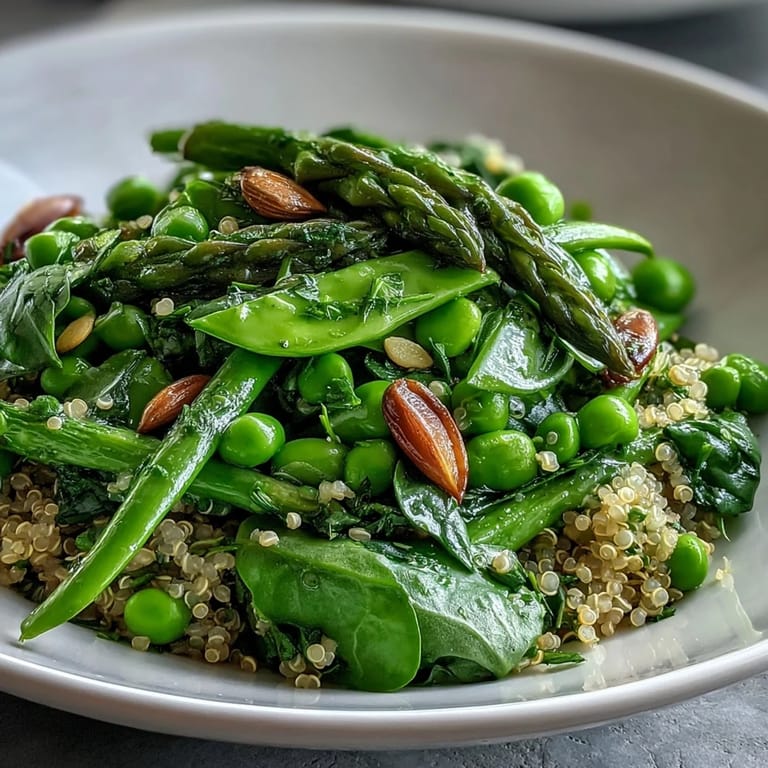
- Divide your cooled grains among four bowls as your base, creating a little nest. Arrange the blanched peas, asparagus, and green beans on top in sections so each bite has a chance to include everything, then tuck the spinach in wherever it fits.
- Finish with love:
- Drizzle the dressing generously over everything—don't hold back—and scatter your seeds, cheese, and fresh herbs on top right before serving. The contrast of temperatures, textures, and colors is what makes this bowl worth the effort.
 Pin This
 The first time someone I hadn't cooked for in years tried this bowl, she closed her eyes and just sat with it for a moment. When she opened them again, she asked if I could teach her how to make it—not because the ingredients were exotic, but because the whole thing felt thoughtful and intentional, like someone had cared about each element. That's the real magic of this recipe.
Why Blanching Makes All the Difference
Blanching seemed like unnecessary fussiness the first time I read about it, but it's genuinely the technique that separates this bowl from a sad mixture of mushy vegetables. The quick plunge into boiling water softens the vegetables just enough to make them tender while the ice bath locks in that bright green color and snappy texture that makes each bite feel fresh. Once you understand that the goal is to preserve the vegetable's best qualities rather than cook it into submission, the whole approach makes sense.
Building Flavor Without Heaviness
I spent years thinking that bowls needed cream sauces or heavy dressings to feel satisfying, but this lemon vinaigrette taught me differently. The mustard acts as an invisible hand, helping the oil and lemon juice stay together instead of separating, while the honey softens the acidity just enough that the dressing feels balanced rather than sharp. The result is something that feels indulgent even though it's actually quite light—proof that good technique beats richness every time.
Customizing Without Losing the Spirit
This recipe is flexible in the best way—you can swap grains based on what's in your pantry or what you're craving that day. If you want to add protein, grilled chicken, crispy tofu, or roasted chickpeas all work beautifully without changing the core identity of the bowl. The real constant is the brightness of the vegetables and the lemon dressing, which are what make this feel like spring no matter what you build around them.
- Try bulgur or couscous if you want something lighter and fluffier than traditional grains.
- Cook extra vegetables and use them in salads or grain bowls for the next few days since they keep well in an airtight container.
- Make the dressing in a mason jar so you can shake it up fresh whenever you're ready to eat.
 Pin This
 This bowl became my answer to those moments when I want to cook something that feels nourishing without being complicated. It's become the thing I make when I want to celebrate spring, or feed people I care about without fussing, or remind myself that sometimes the simplest meals are the ones that stay with you longest.
Recipe FAQ
- → What grains work best in this bowl?
Quinoa, brown rice, and farro all provide excellent texture and nutrition. Quinoa cooks fastest at 15 minutes, while brown rice takes about 35 minutes. Bulgur or couscous make great quick-cooking alternatives.
- → Can I use frozen vegetables?
Absolutely. Frozen peas work beautifully and don't require much additional cooking time. Frozen asparagus and green beans can also be used, though fresh vegetables will have slightly better texture during blanching.
- → How do I prevent vegetables from becoming mushy?
Blanch each vegetable type separately for just 2-3 minutes, then immediately transfer to ice water. This stops the cooking process and preserves the bright green color and tender-crisp texture.
- → Is this bowl protein-rich enough for a main meal?
The grain base provides about 9g protein per serving. For additional protein, consider adding grilled chicken, tofu, chickpeas, or even a soft-boiled egg. The feta cheese also contributes extra protein if included.
- → How long does the lemon dressing keep?
The dressing stays fresh in the refrigerator for up to one week when stored in an airtight container. The olive oil may solidify slightly when cold—simply let it come to room temperature and whisk briefly before using.
- → Can I make this bowl ahead for meal prep?
Yes. Cook the grains and vegetables in advance, then store them separately in the refrigerator. Keep the dressing in its own container and assemble just before eating to maintain optimal texture and freshness.