 Pin This
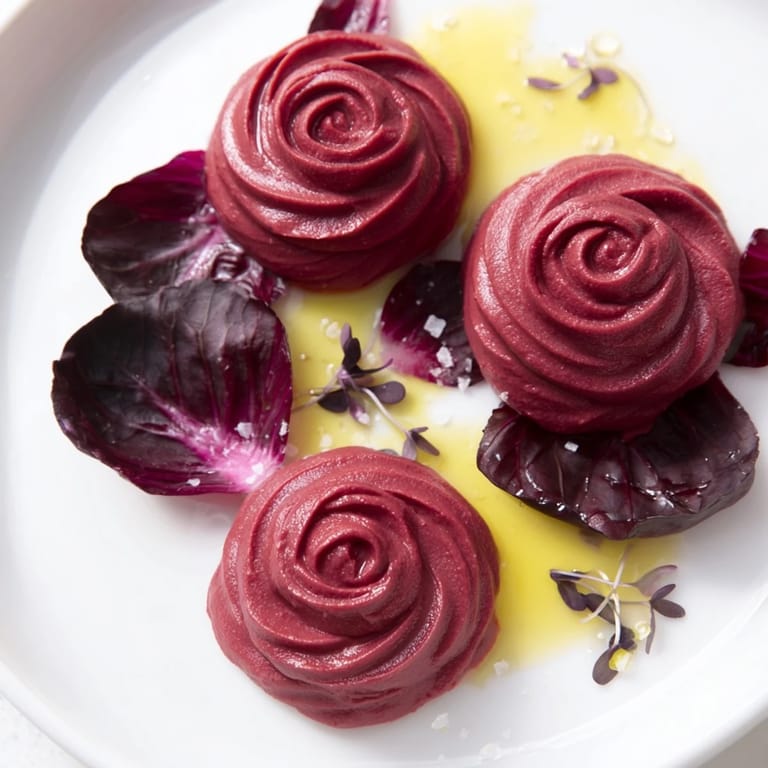
 I discovered this dish by accident one autumn evening when a friend's garden flooded with radicchio and I had a beet sitting on my counter looking lonely. The two seemed to clash at first, but something clicked when I roasted that beet and watched it turn into deep crimson softness. I decided to swirl it like a rose just to see if it would work, and the moment it hit the plate, I knew this wasn't just appetizer food—it was edible art that actually tasted extraordinary.
I made these for a dinner party last spring and watched my most skeptical friend take one look at the plated roses and actually pause mid-conversation. By the third piece of radicchio dipped into the hummus, she was asking for the recipe. That's when I knew this had moved beyond just being pretty—it had become something people genuinely craved.
Ingredients
- Beet: Choose one large, firm beet without soft spots; roasting concentrates its natural sweetness and transforms it into velvet.
- Chickpeas: Canned and rinsed chickpeas are your shortcut to creamy without the overnight soaking.
- Tahini: This sesame paste is what makes the hummus feel luxurious rather than grainy—don't skip it or substitute.
- Extra-virgin olive oil: Use the good stuff here since it's one of only a few main flavors.
- Garlic clove: Just one small clove keeps things subtle; too much overpowers the delicate earthiness.
- Lemon juice: Fresh lemon is non-negotiable; bottled loses the brightness this dish needs.
- Cumin: A whisper of warmth that ties the beet and chickpea together beautifully.
- Salt and pepper: Taste as you go; the beet's natural sweetness means you'll need more salt than you'd expect.
- Cold water: Add gradually so you can control the texture and keep it creamy, not runny.
- Radicchio leaves: Their bitter snap against the sweet hummus creates perfect contrast and natural structure for dipping.
- Flaky sea salt and microgreens: The finishing touches that whisper elegance.
Tired of Takeout? 🥡
Get 10 meals you can make faster than delivery arrives. Seriously.
One email. No spam. Unsubscribe anytime.
Instructions
- Roast the beet until it surrenders:
- Wrap it loosely in foil and let the oven do the work for 40-45 minutes at 400°F. You'll know it's ready when a fork slides through like butter. Let it cool enough to handle, then slip the papery skin right off under cool running water.
- Build the hummus base:
- Add the roasted beet, chickpeas, tahini, olive oil, minced garlic, lemon juice, cumin, salt, and pepper to your food processor. Pulse first, then blend, scraping down the sides occasionally until everything is absolutely smooth with no chunks hiding.
- Achieve the perfect creamy texture:
- Cold water is your texture tool—add it one tablespoon at a time while blending, tasting between additions. You're aiming for something that's luxurious and pipeable but still holds its shape.
- Taste and adjust with intention:
- This is crucial. The beet brings sweetness, so you'll likely need more salt than feels natural. Add a crack of black pepper, a squeeze more lemon if it needs brightness, or a pinch of smoked paprika if you want subtle depth.
- Create your rose with patience:
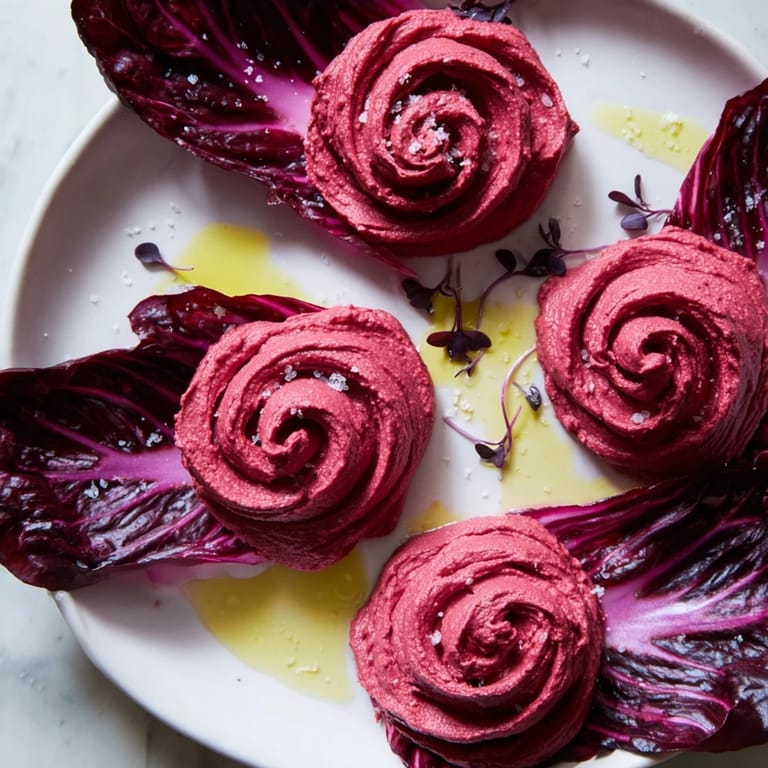
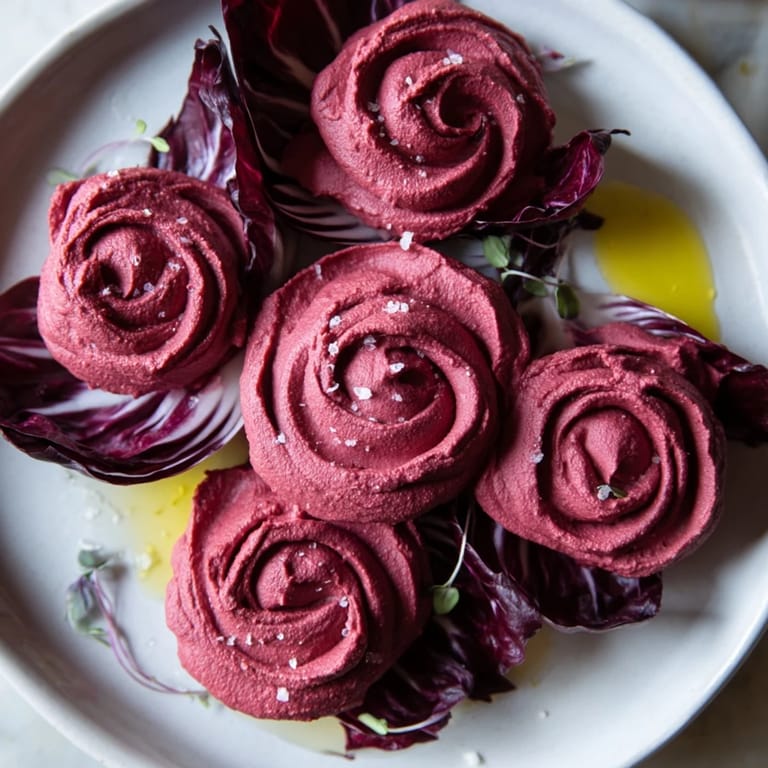
- Using a piping bag with a large star tip makes realistic roses, but honestly, even a spoon swirled with confidence creates something beautiful. The motion should feel like you're creating a spiral bloom.
- Arrange like petals falling:
- Position your radicchio leaves around the hummus roses so they naturally frame the dish. Let some leaves overlap and angle them as if they've just landed.
- Finish and serve immediately:
- Drizzle lightly with olive oil, scatter flaky sea salt across the top, and add microgreens or edible petals if you have them. Serve right away while the hummus is at its creamiest and the radicchio is still crisp.
 Pin This
 There was a moment when my grandmother—who'd never understood why anyone would make food complicated—picked up a radicchio leaf, dipped it, and went quiet. She looked at me and said, 'You made this?' and something shifted in how she saw what I was doing in the kitchen. That's when appetizers stopped being just food and became a way to say something without words.
Why Presentation Matters Here
This dish lives on the edge between flavor and visual storytelling, and both matter equally. The rose shape isn't just decoration—it signals care, and when people see care on a plate, they taste it differently. The radicchio leaves aren't just a vehicle for dipping; they're a visual echo of petals, and that intentional design makes the whole experience feel more intimate than 'hummus and vegetable.'
The Beet and Radicchio Conversation
If you've never paired these two before, you're in for a revelation. Radicchio's sharp, almost peppery bitterness is exactly what the sweet earthiness of beet hummus needs. It's not a flavor accident—it's a flavor conversation where each ingredient makes the other taste more like itself. This pairing is also why you can't rush the seasoning step; the radicchio's edge means your hummus needs to be bold enough to hold its own.
Variations and Possibilities
Once you understand how this works, you can shift things subtly without losing the soul of the dish. Belgian endive creates a more refined presentation but loses some of the visual drama. Pita chips add textural contrast if you want something crunchier. Some cooks add a hint of pomegranate molasses for tanginess, or a whisper of balsamic for depth. The rose shape itself can evolve—some people do tight spirals, others create loose, organic swirls. This is your kitchen, and these are just the starting rules.
- Try adding pomegranate molasses for a deeper, tangier rose.
- Smoked paprika transforms the whole flavor profile into something autumn-ready.
- If serving later, keep the hummus and radicchio separate until the last moment to preserve crispness.
 Pin This
 This is the kind of appetizer that reminds you why you love cooking—it's simple, it's stunning, and it tells a story every time you make it. Serve it with confidence.
Recipe FAQ
- → How do I achieve smooth, creamy hummus?
Blend roasted beets and chickpeas thoroughly, adding cold water gradually to reach a silky texture.
- → What makes the hummus’s color so vibrant?
Roasted dark red beets give the hummus its striking, deep crimson hue.
- → Can I substitute radicchio with other leaves?
Yes, endive or Belgian endive provide similar crispness and work well for dipping.
- → How do I create the rose shapes with hummus?
Use a spoon or piping bag with a large star tip to swirl the hummus into petal-like patterns on the plate.
- → What seasoning enhances the flavor?
A pinch of smoked paprika adds depth, complementing the earthiness of the beet and creaminess.