 Pin This
 I'll never forget the first time I saw a turkey tail charcuterie board at my cousin's Thanksgiving gathering. It was stunning—a work of edible art that made everyone gasp before they even reached for a cracker. That moment, watching my usually reserved uncle actually pause to admire the presentation before diving in, something clicked. I realized that the best appetizers aren't just about flavor—they're about creating magic on the table, about giving people something so beautiful they almost don't want to eat it. Almost. This board has since become my secret weapon for bringing people together, and I'm excited to share how you can create this showstopper too.
I made this board for the first time when my sister asked me to bring something 'special' to her Thanksgiving. I spent the morning arranging and rearranging, and when I walked into her dining room and placed it on the table, the room actually got quiet. For a moment, everyone just stared. Then my nephew asked if it was okay to mess up something that beautiful. That's when I knew I'd created something more than just food—I'd created an experience.
Ingredients
- Smoked turkey breast, thinly sliced (100 g): This is your primary feather, so ask your deli counter to slice it paper-thin. The smoke adds depth and keeps the board from feeling one-note flavor-wise. I learned to always ask them to separate each slice with paper so they don't stick together.
- Salami, thinly sliced (100 g): The deep red color is crucial for visual impact—it adds those warm jewel tones that make the whole board pop. Choose a quality salami that doesn't have that artificial sheen.
- Prosciutto, thinly sliced (100 g): This is where the elegance comes in. Its delicate pink and paper-thin texture create an almost ethereal quality when draped. Handle it gently—it's more forgiving than you'd think.
- Sharp cheddar cheese, sliced (150 g): The sharpness cuts through the richness beautifully. I slice mine about a quarter-inch thick so they hold their shape when arranged in curves.
- Swiss cheese, sliced (100 g): Those holes catch light in the most wonderful way. Plus, the mild nuttiness balances the saltier meats perfectly.
- Gouda cheese, sliced (100 g): Smooth, slightly sweet, and a gorgeous golden color. This cheese is your secret weapon for making the board feel cohesive.
- Round butter crackers (1 cup): These are your staple—neutral, crispy, and they won't overshadow the star ingredients. Their roundness echoes the tail fan shape.
- Whole wheat crackers (1 cup): For the guests who want a bit more substance and earthiness. They also add visual texture contrast.
- Seeded baguette slices (1 cup): These are sturdy enough to hold toppings if someone wants to build their own bite. The seeds add visual interest and a subtle nuttiness.
- Dried apricots (1/2 cup): Sweet, chewy, and that burnt orange color is absolutely essential to the palette. They're also a lifeline for anyone wanting something not savory.
- Red grapes (1/2 cup): Fresh grapes bring a contrast in texture and a pop of moisture. They also photograph beautifully nestled among the meats and cheeses.
- Pecan halves (1/2 cup): Toasted pecans would be even better if you have time. They add richness and that satisfying crunch that makes the board feel substantial.
- Fresh rosemary sprigs: More than garnish—these sprigs release their aroma as people reach across them, adding another sensory layer to the experience. I often nibble on them while assembling.
- Fresh sage leaves: Sage brings an herbal earthiness that ties everything together. Don't skip this—it's the difference between pretty and memorable.
- Small round cheese ball (for the head): This is your turkey's personality. Choose one that's striking—sometimes I make my own with cream cheese and herbs, which makes the board feel even more personal.
- Whole black peppercorns (2): These tiny details are what make people smile. They're the eyes that bring your turkey to life.
- Small piece of red bell pepper (for wattle): That dangly bit under a turkey's chin. A thin strip of pepper is perfect—it's unexpected and whimsical.
- Thin carrot slice (for beak): One perfect slice, and suddenly you have a turkey. The color coordination is almost accidental but perfect.
Tired of Takeout? 🥡
Get 10 meals you can make faster than delivery arrives. Seriously.
One email. No spam. Unsubscribe anytime.
Instructions
- Choose your canvas:
- Select a large round or oval serving board—I prefer something at least 16 inches because it gives you room to spread and breathe. The surface should be smooth enough that ingredients won't slip around, but something with character is even better. I have a beautiful wooden board that's become my go-to, and honestly, part of the magic is that it's the same one every time.
- Create the tail foundation:
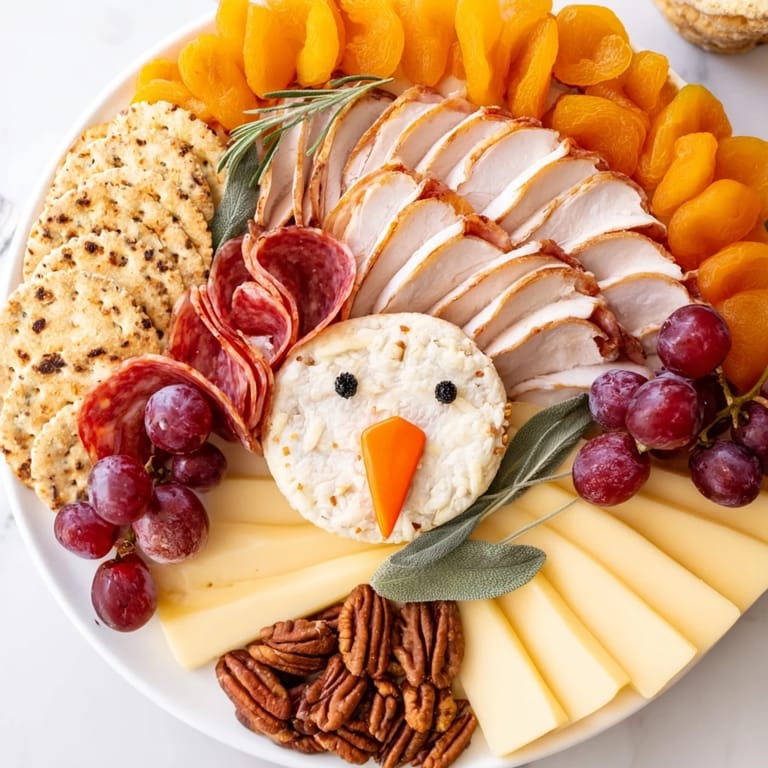
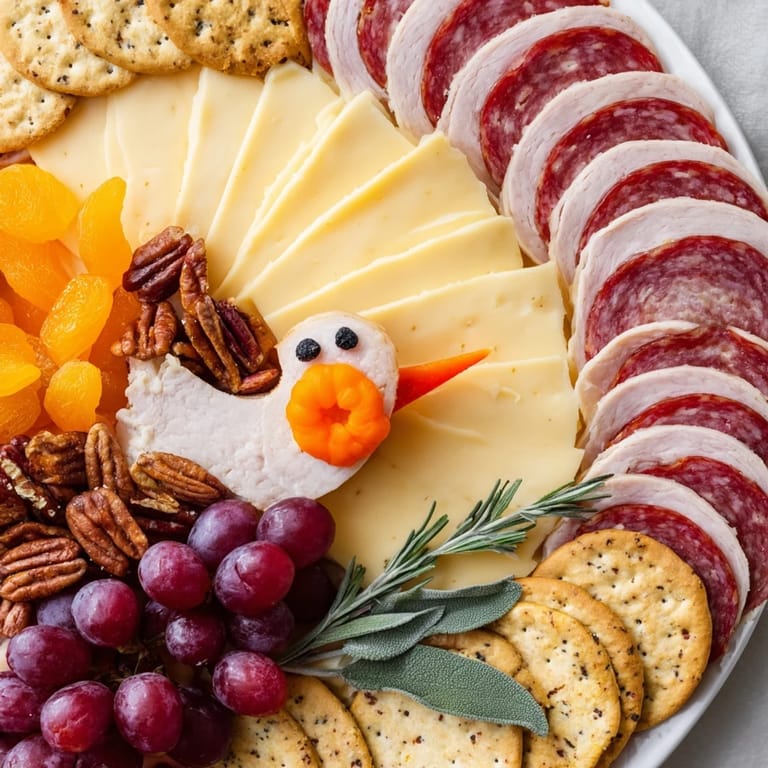
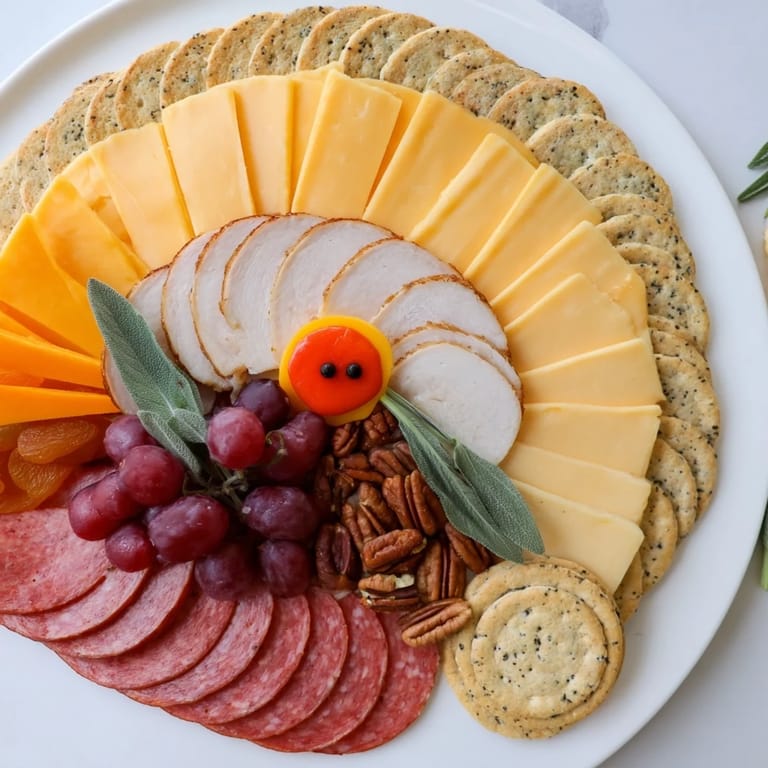
- This is where the magic happens. Take your smoked turkey slices and begin arranging them in overlapping rows, starting from one end and sweeping outward in a gentle semicircle. Think of how a turkey's tail feathers fan out—each piece slightly overlapping the last, creating depth and movement. The meats should cover roughly the upper half to two-thirds of your board. Don't worry about perfection; slight irregularities make it feel more organic and real.
- Layer on the supporting cast:
- Now add your salami and prosciutto, weaving them between and alongside the turkey. Vary the direction slightly—some pieces can go vertical, others at angles. This isn't about precision; it's about creating visual rhythm. The different reds and pinks will create a gradient effect that's absolutely stunning. As you go, step back occasionally and look at the overall composition.
- Build the middle tiers:
- Begin introducing your cheeses in curved rows that follow the tail shape. Arrange sharp cheddar in one gentle arc, Swiss in another, and Gouda in a third. The color transition from deep orange to pale yellow to golden is your visual guide. If a row doesn't feel right, don't force it—move things around. I often find that my first instinct isn't my best instinct, and the rearrangement is part of the joy.
- Add the cracker foundation:
- Layer your crackers and baguette slices beneath the cheeses, still maintaining that curved, fanned arrangement. These aren't just functional—they're part of the visual story. The round butter crackers should be interspersed with the wheat crackers to create textural contrast. The baguette slices can lean against the cheese slices, creating little walls that help define sections.
- Introduce the color accents:
- Now scatter your dried apricots, grapes, and pecans in clusters throughout the board. Don't distribute them evenly—group them strategically where you see gaps or where the color needs lifting. I usually place grapes in three or four clusters, and the apricots and pecans in between. This is the moment where the board starts looking intentional rather than random.
- Add the greenery:
- Tuck fresh rosemary sprigs and sage leaves around the base and edges of your tail formation. These herbs should feel like they're growing out from the arrangement, not just sprinkled on top. The greenery brings freshness and makes the whole thing feel alive. I often arrange a few sprigs pointing outward, like they're part of the tail itself.
- Create the turkey's head:
- Position your cheese ball at one end of the board, slightly elevated if possible. This becomes the turkey's head, and it's the detail that transforms the board from beautiful to brilliant. The positioning matters—it should be at the narrower end of your fanned tail, creating a natural focal point.
- Give your turkey personality:
- This is my favorite step. Press two peppercorns into the cheese ball for eyes—position them close together in the front. Add a tiny sliver of red bell pepper below for the wattle, and crown it all with a thin carrot slice for the beak. Step back and look at your creation. Suddenly, you have a turkey looking out at the world from your charcuterie board. It's magical how much personality this adds.
- Final flourishes and presentation:
- Do one final walk around your board. Fill any gaps you notice, adjust any pieces that have shifted, and make sure the herbs are visible. Place small serving utensils nearby—small forks for the cheese ball, small spreaders for the cheeses. Cover it loosely with plastic wrap if you're making it ahead of time, and bring it to room temperature before serving. When it's time to serve, position it where guests can easily access all components. The magic of this board is that it invites people in—they should be able to reach without stretching too far.
 Pin This
 What I love most about this board is watching people's faces when they first see it. My brother actually said, 'I don't want to ruin it,' which made me laugh until I realized he was serious. But then he reached for a piece of prosciutto, and within minutes, everyone was happily deconstructing my carefully arranged turkey. That's when I knew it was perfect—not because it looked beautiful, but because it brought people joy in multiple ways. First with their eyes, then with their taste buds.
The Art of Arrangement
The secret to making this board work is understanding that food is as much about presentation as it is about taste. When you arrange ingredients thoughtfully, you're not just creating a visual experience—you're telling a story. I've learned that slight imperfections actually add to the charm. A cracker that's slightly askew, a piece of prosciutto with an irregular edge—these details make the board feel handmade and personal, not sterile. The goal isn't magazine perfection; it's genuine, inviting beauty that makes people want to reach in and start building their perfect bite.
Flavor Pairing Wisdom
One thing I discovered through trial and error is that the success of a charcuterie board depends on balance. The salty meats need the sweet fruits. The rich cheeses need the crispy crackers. The earthiness of the herbs needs the brightness of the grapes. Each component plays a supporting role. I used to overthink the ingredient selections, but I've learned that confidence matters. If you love prosciutto, lean into it. If you prefer milder cheeses, choose them without apology. The board is only as good as your conviction about what should be on it.
Making It Ahead
For Thanksgiving mornings when you're juggling a hundred tasks, here's what I've learned works beautifully. You can slice your meats and cheeses the night before and store them in airtight containers. Assemble the board itself about 2-3 hours before serving, cover it loosely with plastic wrap, and keep it in a cool spot. The components stay fresh, the flavors meld slightly, and you're not rushing at the last minute.
- Keep your pecans toasted if possible—they maintain their crunch better and add a sophistication to the final flavor
- Double-check that your bell pepper and carrot are cut thin enough that they won't overpower the delicate cheese ball head
- Consider adding a small bowl of grainy mustard or a fig jam nearby—these unexpected condiments elevate the entire experience
 Pin This
 This Turkey Tail Fan has become my signature move at gatherings, and it never fails to bring a smile. There's something special about creating food that feeds both the soul and the stomach.
Recipe FAQ
- → How do I assemble the turkey tail shape?
Arrange meats in overlapping semicircle rows along the board's top half, then layer crackers and cheeses curved beneath to mimic tail feathers.
- → Can I make this board vegetarian?
Yes, omit the meats and substitute with roasted vegetables or extra cheese varieties for a vegetarian-friendly board.
- → What garnishes enhance the presentation?
Fresh rosemary and sage sprigs add greenery, while dried apricots, grapes, and pecans contribute vibrant color and texture.
- → How is the turkey head created?
A small round cheese ball serves as the head, decorated with peppercorns for eyes, a red bell pepper piece for the wattle, and a carrot slice for the beak.
- → Are there gluten-free options for this board?
Yes, you can replace regular crackers and baguette slices with gluten-free alternatives to accommodate dietary needs.