 Pin This
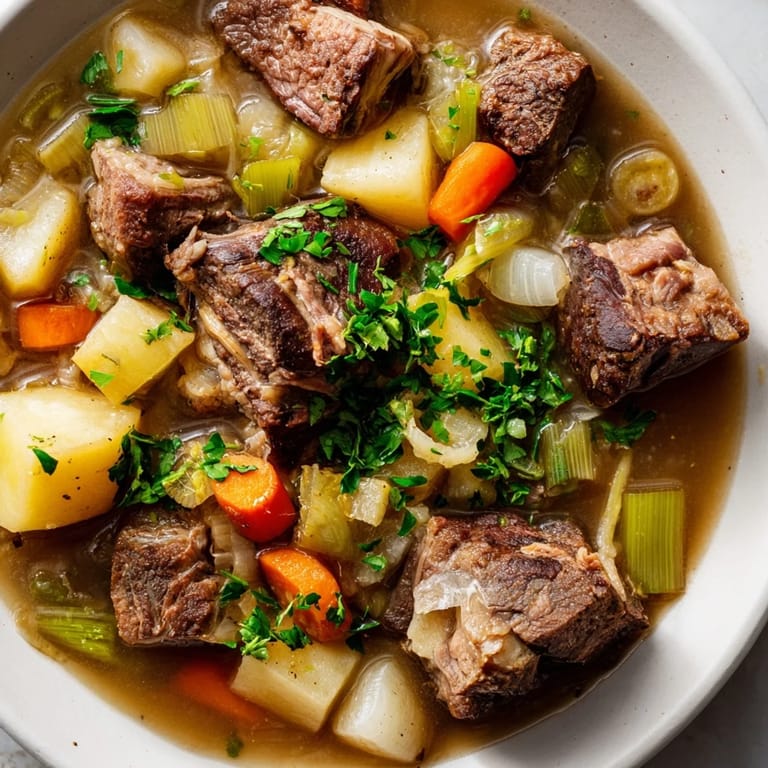
 My grandmother's kitchen smelled like cawl on Sunday afternoons—that unmistakable blend of simmering lamb and earthy root vegetables that meant the whole family would gather around the table by evening. She made it the same way for decades, never from a written recipe, just from knowing exactly when the meat would start to fall apart and how the broth would deepen in color as it cooked. I watched her skim the foam off the top with practiced flicks of a wooden spoon, her hands moving with the confidence of someone who'd made this dish a hundred times before. The first time I made it on my own, I was terrified I'd ruin something sacred, but the moment that familiar warmth filled my kitchen, I realized cawl isn't complicated—it just asks for your attention and time.
I made this for my partner on our first winter together, when we'd just moved into a place with a kitchen big enough for real cooking. The recipe made so much that we ate it for three days straight, and neither of us complained once—we just kept adding more bread and cheese, getting cozy on the couch while it snowed outside. That stew somehow became the thing that made our new place feel like home, which is probably overly sentimental but absolutely true.
Ingredients
- Lamb shoulder (1 kg / 2.2 lbs), cut into large chunks: Bone-in meat is worth seeking out because it releases gelatin that makes the broth silky and gives you real depth of flavor—the kind you can't fake with a stock cube.
- Carrots (2 large), peeled and sliced: They'll soften completely and add subtle sweetness that balances the richness of the lamb.
- Parsnips (2 medium), peeled and sliced: These bring an earthy, slightly sweet character that makes cawl taste distinctly Welsh rather than just generic stew.
- Potatoes (2 medium), peeled and diced: They thicken the broth naturally as they break down, so don't skip them or drain them out.
- Swede or rutabaga (1 small), peeled and diced: If you can't find swede, don't panic, but do try—it adds a peppery undertone you'll miss otherwise.
- Leeks (2), cleaned and sliced: Split them lengthwise and rinse carefully between the layers where grit hides; add half at the start for gentle flavor and the rest near the end for freshness.
- Onion (1 medium), diced: Standard aromatics that dissolve into the broth and form the flavor base.
- Stock (1.5 liters / 6 cups) chicken or lamb: Low-sodium is crucial because you'll be simmering for hours and the flavor concentrates—you can always add salt, but you can't take it out.
- Bay leaves (2): Fish these out before serving unless you enjoy the surprise of biting into one.
- Fresh parsley (1 small bunch): Add most of it at the very end so it stays bright and doesn't taste like boiled grass.
- Salt and freshly ground black pepper: Taste as you go and trust your palate—the seasoning is the only thing entirely in your control.
Tired of Takeout? 🥡
Get 10 meals you can make faster than delivery arrives. Seriously.
One email. No spam. Unsubscribe anytime.
Instructions
- Get the lamb going:
- Place lamb chunks in your biggest pot and cover with cold stock, then bring to a boil—you'll see white foam rise to the surface within a few minutes. Skim this off with a spoon (it's just impurities and will make the broth cloudy if left in), then drop the heat low and cover the pot.
- Let time do the work:
- Leave the lamb alone for a full hour at a gentle simmer—you want the occasional bubble breaking the surface, not a rolling boil. The meat will start releasing its flavor into the broth and becoming tender from the inside out.
- Build the stew:
- Add carrots, parsnips, potatoes, swede, onion, and most of the leeks (leave a handful for later), then season with salt and pepper. Stir once and let it simmer for 45 minutes until the vegetables are completely soft and the lamb is starting to fall apart when you poke it.
- Finish strong:
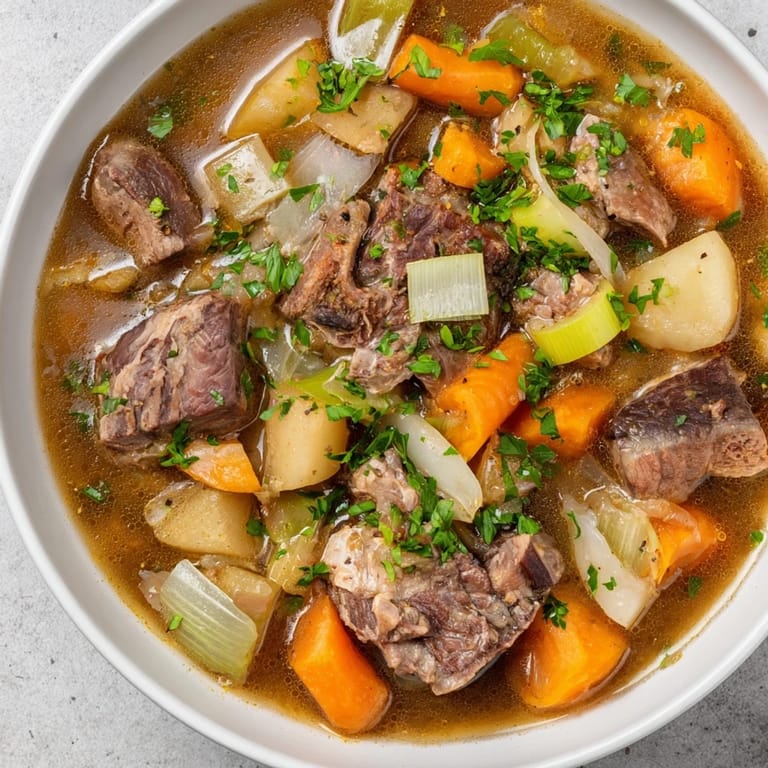
- Add your reserved leeks and the fresh parsley, then simmer for just 10 more minutes—this keeps the leeks from turning to mush and lets the parsley flavor the broth without losing its brightness. Remove the bay leaves and taste everything, adjusting salt and pepper until it tastes like comfort.
 Pin This
 Years later, I understand why my grandmother never rushed cawl—why she'd start it in the morning for an evening meal, why she'd taste it five times as it cooked, why she always made enough for seconds. It's not because the recipe is complex; it's because the slowness is the whole point. The stew teaches you patience in a way that feels kind instead of frustrating, rewarding you at the end with something that tastes like generations of Sunday afternoons in one bowl.
The Secret of Bone-In Meat
I learned this the hard way after making cawl with boneless lamb the first time—the broth was good but somehow flat, missing something I couldn't name. The bones release collagen as they cook, which transforms into gelatin and gives the broth that silky mouthfeel that makes every spoonful feel nourishing. It's not glamorous, but it's the difference between stew and real cawl. Bone-in lamb shoulder isn't always easy to find, so ask your butcher or order ahead; it's worth the small extra effort.
Why This Stew Gets Better With Time
Cawl is one of the rare dishes that actually improves when you make it ahead—the vegetables soften further, the flavors deepen and blend together, and the whole thing becomes more cohesive. I make it on a Thursday evening and reheat it gently on Friday, and by then it tastes more itself than it did the night before. If you refrigerate it, the fat solidifies on top, so you can skim it off easily if you prefer a lighter version, or leave it and enjoy the richness.
Serving and Sides That Matter
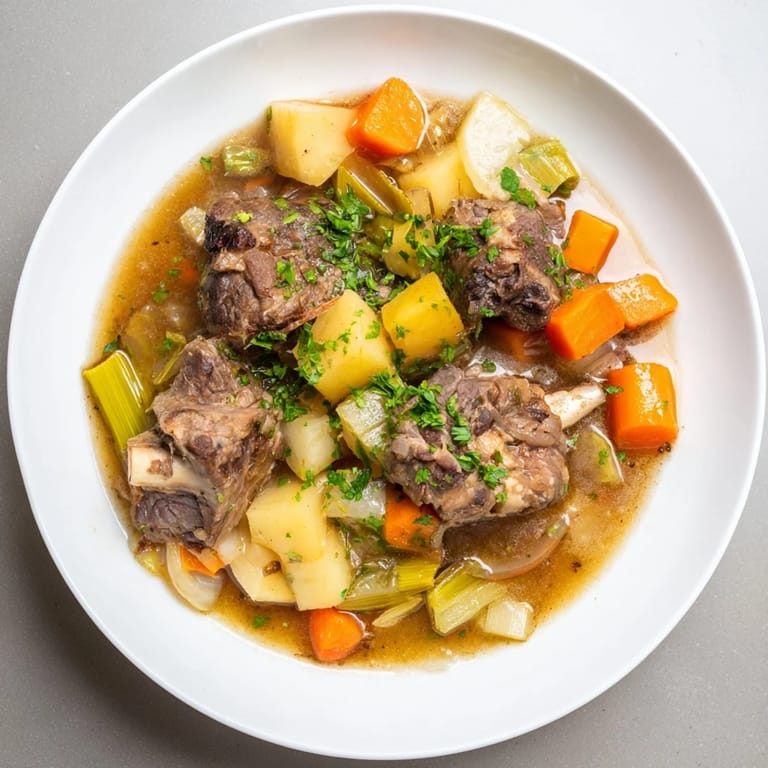
Cawl isn't a delicate dish—it's meant to be served in deep bowls with crusty bread for soaking up broth and good Welsh cheese like Caerphilly alongside. I've also served it with a drizzle of good olive oil and extra fresh parsley, which adds something bright against all that earthy richness. The stew is enough on its own, but the bread and cheese aren't optional extras; they're part of the tradition that makes this meal feel complete.
- Crusty bread is non-negotiable for dipping and soaking up every last bit of broth.
- Caerphilly or any crumbly Welsh cheese crumbles perfectly into a warm bowl and adds creamy richness.
- Fresh parsley as a final garnish keeps it from feeling too heavy and adds a small note of brightness.
 Pin This
 This stew is the kind of dish that reminds you why people cook in the first place—not for flash or complexity, but for the simple magic of time and good ingredients transforming into something that feeds both body and soul. Make it for people you love, and let it do what it's been doing in Welsh kitchens for generations.
Recipe FAQ
- → What cut of meat works best for Welsh Cawl?
Lamb shoulder with the bone in is ideal for rich flavor and tender texture after slow cooking.
- → Can I substitute the vegetables in this dish?
Yes, root vegetables like carrots, parsnips, potatoes, and swede work well, but you may adjust based on seasonality.
- → How long should the stew simmer for optimal tenderness?
Simmer gently for about 2 hours allowing the lamb and vegetables to fully soften and develop deep flavors.
- → Is it necessary to use fresh herbs?
Fresh parsley enhances the flavor significantly, but dried herbs can be used if fresh are unavailable.
- → What traditional accompaniments pair well with this dish?
Crusty bread or Welsh cheeses like Caerphilly complement the hearty lamb and vegetable mix perfectly.