 Pin This
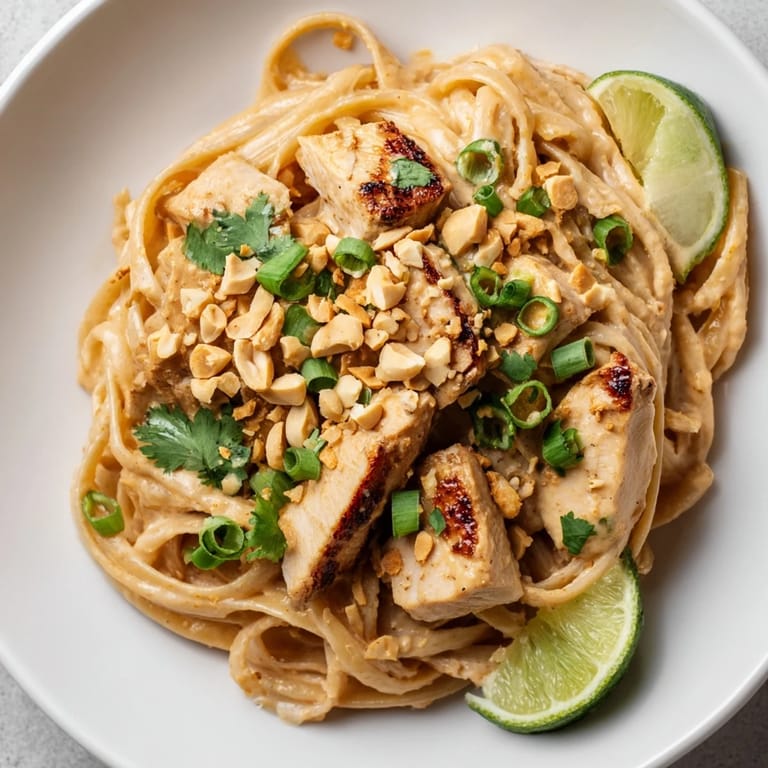
 One Tuesday evening, I was standing in my kitchen staring at a jar of Thai peanut sauce I'd picked up on impulse, wondering what to do with it beyond straight spoonfuls. Then it hit me—what if I stopped overthinking fusion and just tossed it with pasta and chicken? Twenty minutes later, I had this bright, creamy, tangy dish that felt like stepping into a Bangkok night market without leaving my apartment. It became the meal I make when I want something that tastes like I tried harder than I actually did.
I made this for my sister who'd just moved into her first place, and she stood there tasting it with this look of surprise, like she couldn't believe something so good had come from her bare kitchen. She asked for the recipe right away, and I loved that moment—when a simple dinner becomes proof that she can feed herself well.
Ingredients
- Linguine or spaghetti, 340 g (12 oz): The long strands catch the sauce better than shorter shapes, but honestly, use whatever pasta you have—it'll work.
- Boneless, skinless chicken breast, 450 g (1 lb), thinly sliced: Slice against the grain so it stays tender and absorbs the sauce; don't skip this step.
- Vegetable oil, 1 tbsp: High heat won't burn it, which matters when you're searing chicken quickly.
- Salt and black pepper: Season the chicken generously before it hits the pan—this is where flavor starts.
- Ready-made Thai peanut sauce, 1 cup (240 ml): This is the shortcut that makes everything possible; pick a brand you actually like eating straight.
- Soy sauce, 2 tbsp: Adds depth that the peanut sauce alone doesn't have; use low-sodium if you're watching salt intake.
- Lime juice, 2 tbsp (about 1 lime): Fresh lime makes an enormous difference—bottled juice tastes flat by comparison.
- Grated fresh ginger, 1 tsp: Grate it right before using; it releases more flavor than minced or dried.
- Garlic, 2 cloves, minced: Don't use the jar stuff here; the fresh bite matters.
- Fresh cilantro, 1/4 cup, chopped: Added at the end so it stays bright and herbaceous.
- Fresh mint, 2 tbsp, chopped (optional): If you have it, include it—the cooling effect balances the richness perfectly.
- Green onions, 2, thinly sliced: Some go in at the end, some as garnish; they add a gentle onion note without overpowering anything.
- Roasted peanuts, 1/4 cup, chopped: The texture contrast is essential; toast them lightly if they're not already roasted.
- Lime wedges for serving: Let people squeeze their own—this dish loves that final brightness.
Tired of Takeout? 🥡
Get 10 meals you can make faster than delivery arrives. Seriously.
One email. No spam. Unsubscribe anytime.
Instructions
- Get your pasta started:
- Fill a large pot with salted water and bring it to a rolling boil—the water should taste like the sea. Add pasta and cook until al dente, which means it has a slight bite when you test it. Drain and set aside, but don't rinse it; that starch helps the sauce cling.
- Sear the chicken until golden:
- Heat oil in a large skillet over medium-high heat until it shimmers. Add your chicken slices in a single layer, season with salt and pepper, and let them sit undisturbed for a couple minutes so they develop a golden crust. Toss and cook another 3–4 minutes until cooked through—you want them tender, not rubbery.
- Build the sauce gently:
- Lower the heat to medium and add the peanut sauce along with soy sauce, lime juice, ginger, and garlic. Stir slowly and let it warm through for 2–3 minutes, tasting as you go. This moment is where the flavors start talking to each other.
- Bring it all together:
- Return the pasta and chicken to the skillet and toss everything until evenly coated and glossy. The warmth will soften the herbs without cooking them to nothing.
- Finish with fresh herbs:
- Turn off the heat and stir in cilantro, mint, and half the green onions. Smell it at this moment—that's when you know you've got it right.
- Plate and garnish:
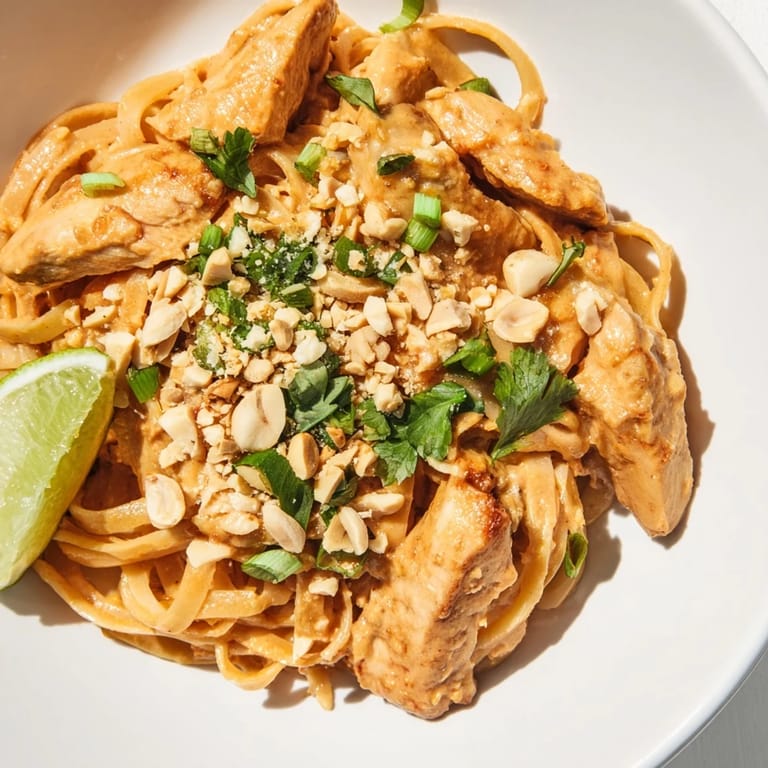
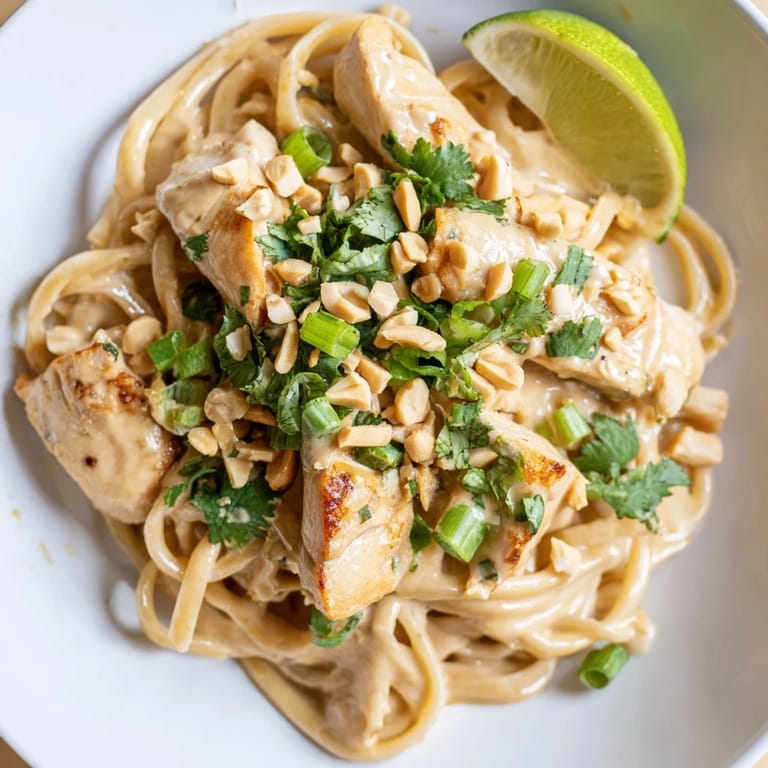
- Divide among bowls and top with chopped peanuts, remaining green onions, and lime wedges so everyone can finish their own bowl exactly how they like it.
 Pin This
 There was a night when I made this for friends who'd just wrapped a stressful project, and watching them slow down between bites, really tasting it, reminded me that sometimes a meal is just a way of saying 'I'm glad you're here.' This dish does that without any pretense.
Why This Works as Fusion
Thai peanut sauce already bridges cultures—it's built on techniques and flavors that work with almost anything. Pasta is the same way. When you put them together with just enough confidence to not second-guess yourself, something genuine happens. You're not trying to turn one cuisine into another; you're just letting two traditions that already understand richness and balance meet in the middle.
Making It Your Own
This recipe is flexible in ways that matter. If you love heat, sriracha or fresh red chilies go in without changing the balance. If mint or cilantro don't sit right with you, more basil or no herbs at all still works. The beauty is that the core—pasta, sauce, chicken, lime—stays solid no matter what you adjust around it. It's confidence-building cooking.
The Small Moments That Matter
I've learned that the smell of fresh ginger hitting hot peanut sauce is one of those kitchen smells that makes everyone stop and pay attention. It's also the smell that tells you the timing is right—you're not over-thinking, you're just cooking. The other thing I've noticed is that people always reach for extra lime wedges, which means the acidity is doing exactly what it should be, cutting through and waking everything up.
- Keep the heat moderate when you add the sauce so it stays creamy and doesn't split.
- Taste the sauce before adding the pasta and chicken so you can adjust lime or soy sauce if needed.
- Serve immediately because pasta picks up sauce fast and you want that glossy, fresh finish.
 Pin This
 This is the kind of dish you make when you want something that tastes like you've worked harder than you actually have. Serve it warm with those lime wedges, and let everyone finish it exactly as they want.
Recipe FAQ
- → What type of pasta works best for this dish?
Linguine or spaghetti are ideal as they hold the creamy peanut sauce well, but rice noodles can be used for a gluten-free option.
- → How can I make this dish spicier?
Add a dash of sriracha or red chili flakes to the sauce while simmering to introduce some heat.
- → Can I substitute chicken with another protein?
Yes, tofu makes a great vegetarian substitute, maintaining the dish’s texture and flavor balance.
- → What herbs brighten the flavors in this dish?
Fresh cilantro and mint are used to add an aromatic, refreshing contrast to the creamy sauce.
- → How should the chicken be prepared for best results?
Thinly slice the chicken breasts and sauté them until golden and cooked through to ensure tenderness and flavor.