 Pin This
 The first time I actually understood haggis, I wasn't reading about it in a cookbook—I was standing in a Edinburgh kitchen on a grey November afternoon, watching my friend Margaret unwrap a cloth-covered bundle with the kind of reverence usually reserved for something precious. She told me her grandmother had taught her the recipe, and that haggis wasn't the dare-food tourists made it out to be, but something deeply comforting when made with care. That day, the smell of toasted oats and spiced offal filling the kitchen made me realize how wrong I'd been about this dish.
I made haggis for a Burns Night dinner party and watched skeptical faces transform into quiet concentration as people actually savored each bite. Someone asked for seconds, then a third, and by the end of the night, three people wanted the recipe. That's when I knew it wasn't about proving anything—it was about sharing something real.
Ingredients
- Sheep's heart, liver, and lungs (500 g): The heart of haggis, literally—these create the distinctive texture and depth you can't replicate with mince alone, though lamb or liver mince works if sourcing offal feels impossible.
- Beef or lamb suet (200 g, finely chopped): This is your binding agent and flavor carrier; don't skip it or try to substitute with oil, as the richness matters.
- Lamb or beef mince (300 g, optional): Adds texture variation and makes the mixture less dense if you prefer a lighter bite.
- Steel-cut oats, toasted (150 g): Toasting them first deepens their flavor and prevents a bland, chalky taste in the final dish.
- Onions (2 medium, finely chopped): They should be almost paste-like after cooking, not chunky—this means very fine chopping.
- Beef stock (250 ml): The moisture that holds everything together; warm stock incorporates more smoothly than cold.
- Ground spices (black pepper 1 tsp, coriander 1 tsp, nutmeg 1 tsp, allspice ½ tsp): These four create the signature warmth; measure them seriously, as spices are what separate good haggis from forgettable.
- Salt (1½ tsp): Layer it in rather than all at once to avoid over-seasoning.
- Sheep's stomach or large sausage casing: A pudding basin with foil works perfectly fine if casings intimidate you, and honestly, the result is nearly identical.
- Potatoes and turnips (500 g each): These deserve their own butter and seasoning—they're not just sides, they're essential to the experience.
- Butter (50 g): Generous amounts mashed into neeps and tatties complete the picture.
Tired of Takeout? 🥡
Get 10 meals you can make faster than delivery arrives. Seriously.
One email. No spam. Unsubscribe anytime.
Instructions
- Prepare the offal with patience:
- Rinse the heart, liver, and lungs thoroughly under cold water, removing any blood or debris. Place them in a large pot, cover completely with cold water, bring to a rolling boil, then reduce to a gentle simmer for 1 to 2 hours until the meat is so tender it falls apart easily when pierced. Reserve 250 ml of that cooking liquid—it carries flavor you don't want to lose.
- Build your flavor foundation:
- Once the offal is cool enough to handle, mince it finely by hand or with a food processor, then combine it in a large bowl with the finely chopped suet, toasted oats, very finely chopped onions, and the optional mince if you're using it. This is where you're creating the base texture.
- Season with intention:
- Pour in the warm beef stock and reserved cooking liquid, then add all your spices and salt. Mix thoroughly with your hands until the mixture is evenly combined and moist but not soupy—it should hold together when squeezed.
- Fill your casing carefully:
- If using a sheep's stomach or sausage casing, rinse it gently and fill it loosely with the mixture, leaving about an inch of space at the top for expansion during cooking. Tie the ends securely with kitchen twine, or if using a pudding basin, spoon the mixture in and cover the top tightly with foil.
- Steam for two hours in still water:
- Place your filled casing or basin in a large pot of gently simmering water, ensuring the water comes halfway up the sides but doesn't touch the top. Check the water level every 30 minutes and top up with boiling water as needed—this gentle steaming is what keeps the haggis tender and prevents it from becoming rubbery.
- Prepare the companions:
- While the haggis steams, boil the potatoes in salted water until a fork slides through easily, about 20 to 25 minutes. In a separate pot, do the same with the turnips. Drain each well, then mash with plenty of butter and season generously with salt and pepper.
- Rest and serve with ceremony:
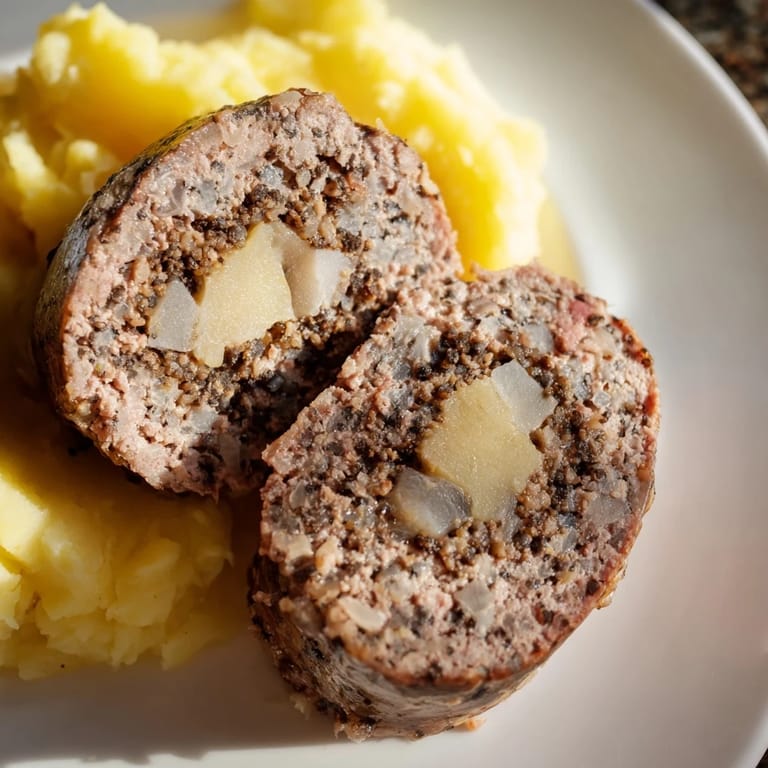
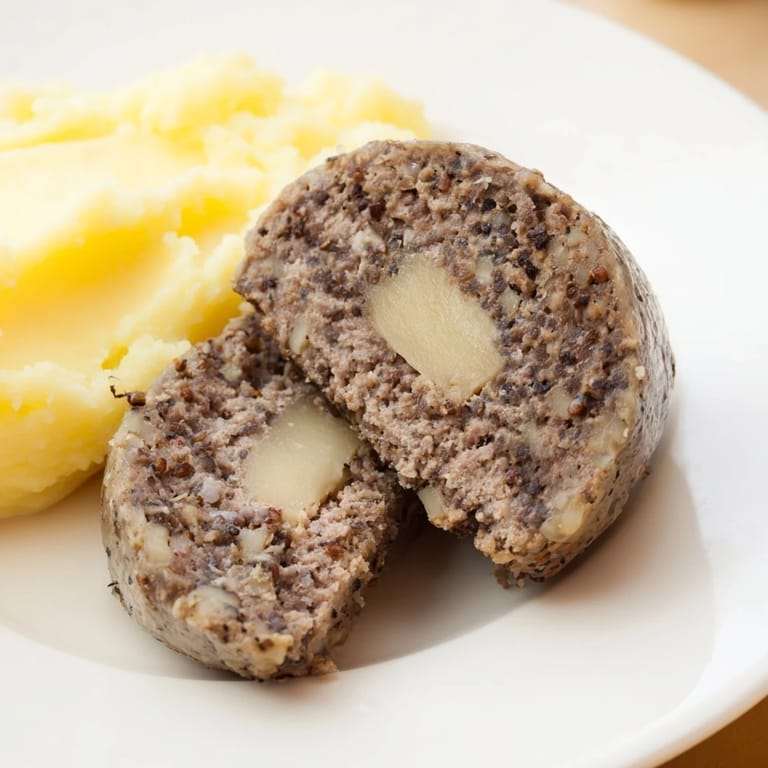
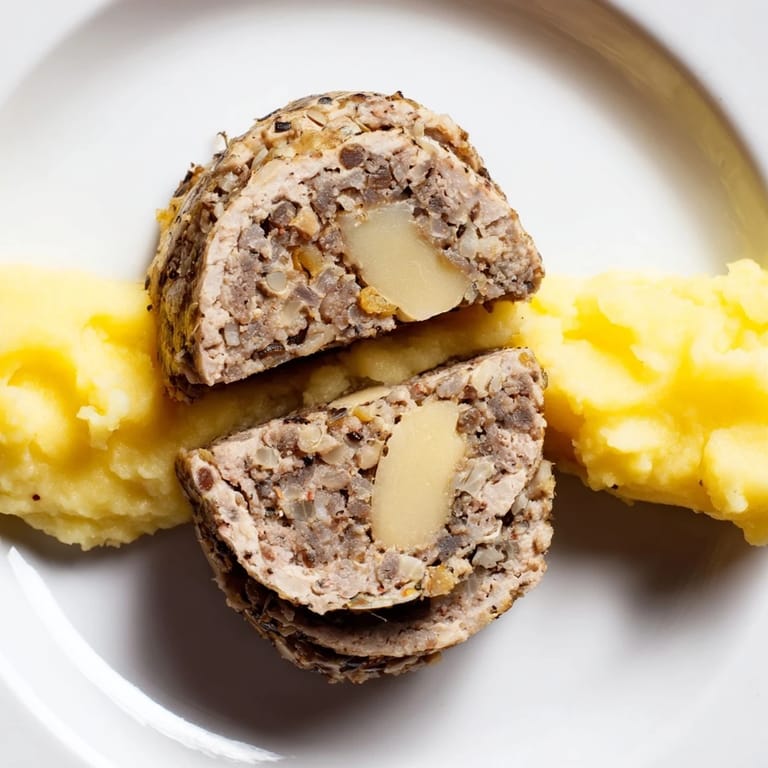
- Remove the haggis from the water and let it rest for 5 minutes before carefully opening it with a sharp knife. The filling will be hot and steaming—scoop it onto plates alongside the buttered neeps and tatties, and watch people's expressions shift from curiosity to genuine pleasure.
 Pin This
 I remember my friend's mother explaining that in hard times, haggis represented ingenuity and nothing wasted—every part of the animal honored and turned into something that fed the whole family. That philosophy changed how I think about cooking, and now whenever I make it, I feel that same respect in my hands.
The Story Behind Scotland's Most Misunderstood Dish
Haggis gets a bad reputation because people imagine it before tasting it, but the truth is far more interesting. This dish emerged from necessity and skill, turning ingredients that others discarded into something rich and complex. Every region in Scotland had its own version, its own spice balance, its own story. What you're making here isn't exotic or shocking—it's honest cooking.
Why the Spices Matter More Than You Think
The combination of black pepper, coriander, nutmeg, and allspice creates a warmth that reads almost like a secret ingredient you can't quite name. These spices were expensive and precious, which tells you how important flavor was to people making haggis. Don't treat them as suggestions or adjust them on a whim—they're the backbone of what makes this dish sing.
Making It Your Own
Once you understand the structure of haggis, you can adjust it slightly based on what you can find or what your taste prefers. Some Scottish families add whisky to their mixture, others keep it completely straightforward. The beauty of this recipe is that it's flexible enough to honor tradition while making room for your own preferences and kitchen reality.
- A whisky cream sauce on the side elevates the dish without overwhelming it.
- If you can't find fresh offal, a quality liver mince creates a surprisingly similar result.
- Vegetarian haggis made with mushrooms, pulses, and vegetable suet follows the same cooking method and produces a genuinely satisfying dish for non-meat eaters.
 Pin This
 Haggis taught me that the most rewarding dishes are often the ones people are afraid to try. Serve it with confidence, and you'll change someone's mind about what Scottish food really is.
Recipe FAQ
- → What ingredients create the unique flavor in this dish?
The combination of spiced offal (heart, liver, lungs), toasted oats, and warm spices like coriander and nutmeg contribute to its distinct savory profile.
- → How is the offal prepared before cooking?
Offal is rinsed thoroughly, simmered gently in water until tender, then finely minced to blend smoothly with the other ingredients.
- → Can substitutes be used if offal is unavailable?
Yes, a mixture of lamb or beef mince can replace offal for a milder taste and similar texture.
- → What is the purpose of using a casing or pudding basin?
The casing or basin holds the mixture together during the slow boil, allowing flavors to meld while maintaining shape.
- → How are the traditional sides prepared?
Turnips (neeps) and potatoes (tatties) are boiled until tender, then mashed with butter and lightly seasoned for a creamy accompaniment.
- → Are there vegetarian adaptations for this dish?
Vegetarian options can use pulses, mushrooms, and vegetable suet to replicate the texture and savory taste.