 Pin This
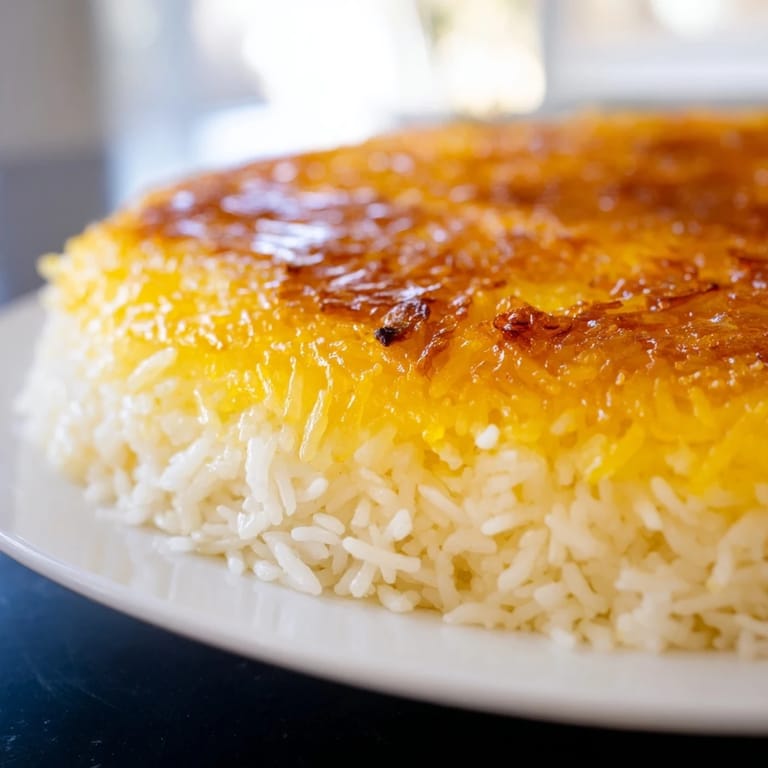
 The first time I understood what tahdig truly meant was when my grandmother handed me a wooden spoon and asked me to listen. Not to follow instructions, but to listen. Ten minutes into cooking, that telltale crackling sound from the bottom of the pot—that gentle, patient sizzle—told me the magic was happening. I'd made rice countless times before, but I'd never made it sing like this. Persian tahdig isn't just about technique; it's about honoring that crispy, golden crust that forms at the bottom like edible treasure, while the rice above stays impossibly fluffy and infused with saffron.
I made this for my roommate on a Tuesday when she'd had the worst day at work. She walked into the kitchen as I was inverting the pot, and the look on her face when that golden tahdig emerged, perfectly intact and crackling softly on the serving platter, made her forget about everything else for just a moment. Food doesn't always heal, but it can create a small pocket of peace, and that's what this dish did that night.
Ingredients
- Basmati rice (2 cups): Use long-grain basmati for that delicate, separate texture; short-grain rice gets too sticky and won't give you the light, airy layers you need.
- Saffron threads (1/4 teaspoon): Don't skip this or substitute it; saffron brings an earthy, slightly floral warmth that quietly transforms the entire dish.
- Plain Greek yogurt (4 tablespoons): The yogurt is your secret weapon for the tahdig layer, creating a tangy, creamy foundation that crisps into something almost caramelized.
- Vegetable oil and unsalted butter (2 tablespoons each, plus extra for the pan): The combination of both creates the ideal balance of high heat and rich flavor for that perfect golden crust.
- Ground turmeric and black pepper (1/2 teaspoon each): These are optional, but turmeric adds a subtle earthy note and a beautiful warm color to the rice.
- Salt (1 tablespoon for soaking): Salting the soak water seasons the rice from the inside out, not just on the surface.
Tired of Takeout? 🥡
Get 10 meals you can make faster than delivery arrives. Seriously.
One email. No spam. Unsubscribe anytime.
Instructions
- Rinse and soak your rice:
- Run the rice under cold water, stirring gently with your fingers, until the water that drains away runs completely clear—this removes the starch that would otherwise make everything gluey. Soak it in salted water for at least 30 minutes; this hydrates each grain evenly so it cooks to that perfect tender-but-firm state.
- Parboil until just shy of done:
- Bring a large pot of water to a boil, add your drained rice, and cook for just 5 to 6 minutes until the grains are tender on the outside but still have a slight firmness in the center. Drain it immediately so it stops cooking; you want it underdone at this stage.
- Awaken the saffron:
- Grind the threads between your fingers into a small bowl and pour hot water over them, letting them steep for 10 minutes until the water turns deep amber and smells intoxicating. This concentrated saffron water is what brings the whole dish together.
- Build your tahdig base:
- Mix the yogurt with 1 tablespoon of that saffron water and about 1 cup of your parboiled rice, adding turmeric and pepper if you're using them. The mixture should be thick and creamy, ready to form a protective, flavorful crust.
- Heat your pan with oil and butter:
- In your heavy pot, warm the vegetable oil and melted butter together over medium heat until you hear a gentle sizzle—you want it hot enough to create that tahdig, but not so hot that it burns. This takes maybe 2 minutes, but don't rush it.
- Spread the yogurt-rice mixture:
- Gently spread your tahdig mixture in an even layer across the bottom of the hot pot, making sure it covers the entire surface. Listen as it hits the heat and begins to toast; that's the sound of potential.
- Layer the remaining rice:
- Spoon the rest of your rice over the yogurt layer, mounding it gently toward the center rather than packing it down. Drizzle the remaining saffron water over the top, then use the handle of a wooden spoon to poke about six small holes down through the rice so steam can escape freely.
- Steam with the towel-wrapped lid:
- Wrap your pot lid in a clean kitchen towel before covering the pot tightly; the towel absorbs condensation so it doesn't drip back onto the rice and make it soggy. Cook over medium heat for 10 minutes until you hear the rice beginning to crackle gently, then lower the heat to the absolute lowest setting and let it go for 35 to 40 minutes.
- Rest and reveal:
- Turn off the heat and let everything sit undisturbed for 5 minutes, giving the crust time to fully set and the rice to finish steaming gently. Then comes the moment of truth: run a thin spatula around the edges, place your serving platter on top, take a breath, and flip it over to reveal your golden, crispy tahdig.
 Pin This
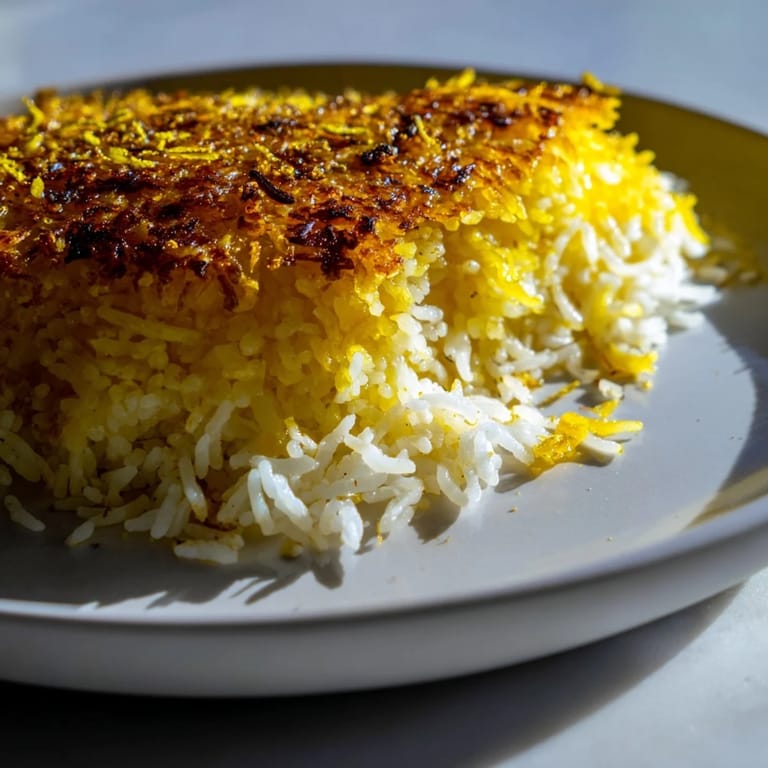
 The moment you invert that pot and the tahdig emerges whole and glowing like a bronze medal, you understand why this dish has been made the same way for generations. It's not fancy or complicated, but it demands respect and attention—and in return, it gives you something both comforting and show-stopping.
The Art of Tahdig
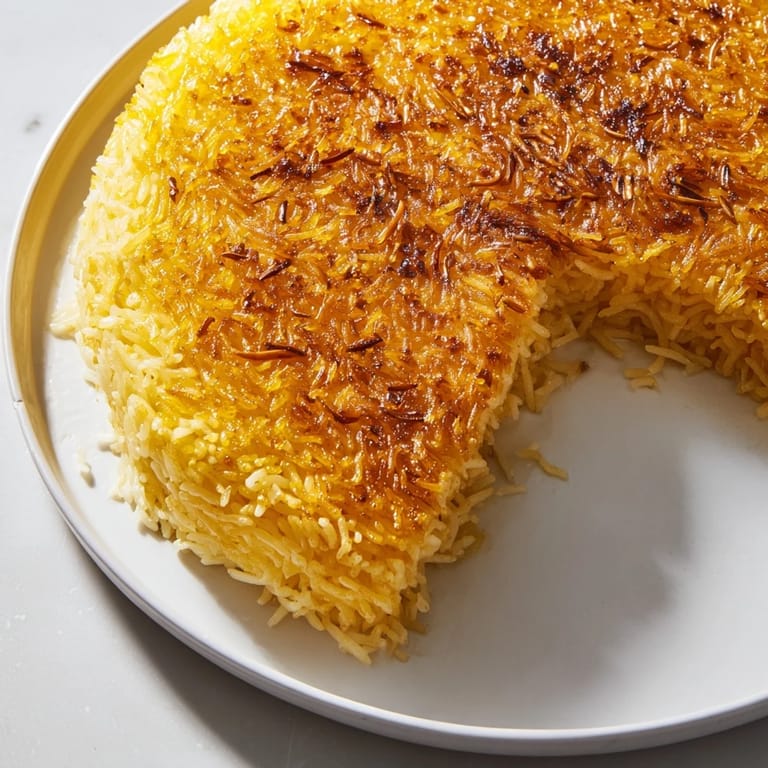
Tahdig isn't an accident or a mistake; it's the whole point. In Persian cooking, the burnt bottom of the rice pot isn't something you scrape off apologetically—it's the prize, the crispy, caramelized treasure that gets served on top. The yogurt-rice mixture creates a protective layer that browns and crisps rather than burns, and that distinction matters completely. Understanding this shift in perspective transforms how you approach the dish; you're not trying to avoid burning anything, you're intentionally building layers of flavor and texture.
Variations and Play
Once you've mastered the yogurt tahdig, you can experiment with the base layer. Some cooks use thinly sliced raw potatoes instead of yogurt, creating a different kind of crunch. Others use pieces of lavash flatbread, which crisps up into something almost like a cracker. The technique stays the same; only the tahdig base changes. I've even heard of cooks mixing the yogurt with minced fresh herbs, though my grandmother always said yogurt alone lets the saffron take the spotlight.
Serving and Accompaniments
Tahdig is respectful enough to shine on its own, but it also knows how to play well with others. Serve it alongside slow-cooked stews, grilled kebabs, or even roasted vegetables; the fluffy rice soaks up sauce while the tahdig provides textural contrast. Fresh herbs—cilantro, dill, or parsley—and tart dried barberries scattered over the top add brightness and a little visual flourish that makes people pause before eating.
- If your tahdig doesn't unmold perfectly the first time, don't despair; even broken tahdig tastes incredible mixed with the fluffy rice on the plate.
- Leftover tahdig can be broken into pieces and fried in a little butter the next day; it becomes something entirely new and unexpectedly delicious.
- Make this dish when you want to impress someone or when you simply want to remind yourself that you can create something beautiful with patience and rice.
 Pin This
 Making tahdig teaches you something quiet about cooking: that the best results come not from rushing, but from understanding what's happening beneath the surface. Listen to your pot, trust the process, and let that golden crust remind you why you started cooking in the first place.
Recipe FAQ
- → What is tahdig in Persian cooking?
Tahdig refers to the golden, crispy crust formed at the bottom of the pot when cooking rice, often enhanced with yogurt or oil for texture and flavor.
- → How is the crispy tahdig layer achieved?
The tahdig forms by layering a saffron-yogurt mixture at the pot's base and steaming the parboiled rice gently over medium to low heat until a caramelized crust develops.
- → Can I use different ingredients for the crust layer?
Yes, alternatives like thinly sliced potatoes or flatbread can replace the yogurt-rice mixture to create varied tahdig textures and flavors.
- → What role does saffron play in this dish?
Saffron adds a vibrant color and a distinctive aromatic note that complements the fluffy basmati rice and golden crust beautifully.
- → How should the rice be prepared before steaming?
The rice is thoroughly rinsed and soaked to remove starch, then parboiled until tender but firm before layering for the final steam.
- → Is this dish suitable for special diets?
It's vegetarian and gluten-free, though it contains dairy from yogurt and butter, so adjustments are needed for dairy-free diets.