 Pin This
 The first time I made tagine, I was in a cramped kitchen in Marrakech, watching my host stirringly expertly combine spices I'd never heard of. Years later, back home, I craved that exact moment—the kitchen filling with warmth and cinnamon before anything was even cooked. This Moroccan tagine chicken became my way of chasing that memory without a plane ticket. It's easier than you'd think, and somehow tastes like an adventure in a single pot.
I made this for a dinner party on a rainy October night when everyone needed something comforting but unexpected. The moment the preserved lemon hit the pot, my friend Sarah leaned over the stove and asked what that smell was—not just dinner, but something with a story. By the time we sat down, the whole apartment smelled like North Africa, and suddenly we weren't just eating; we were traveling together.
Ingredients
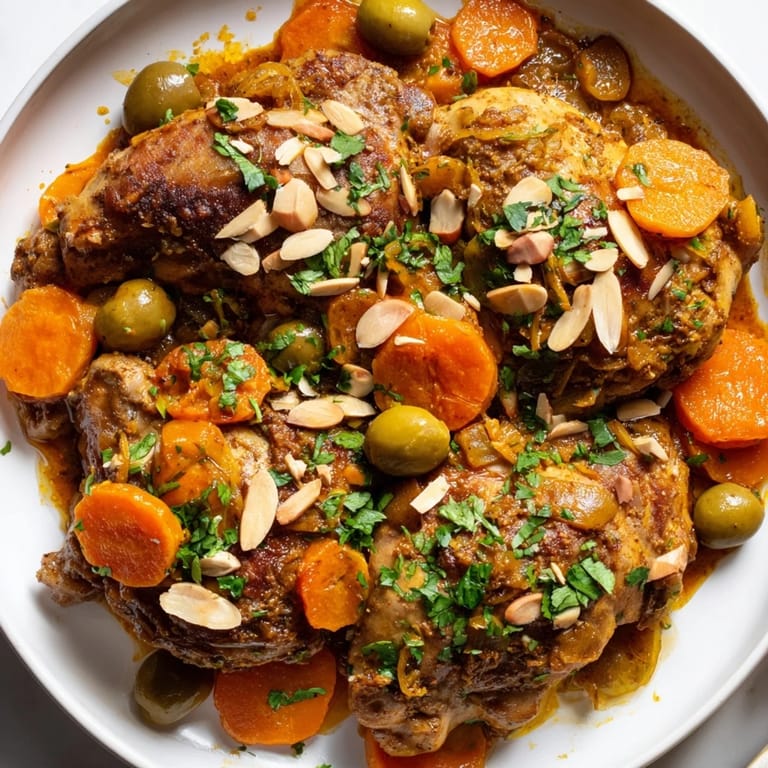
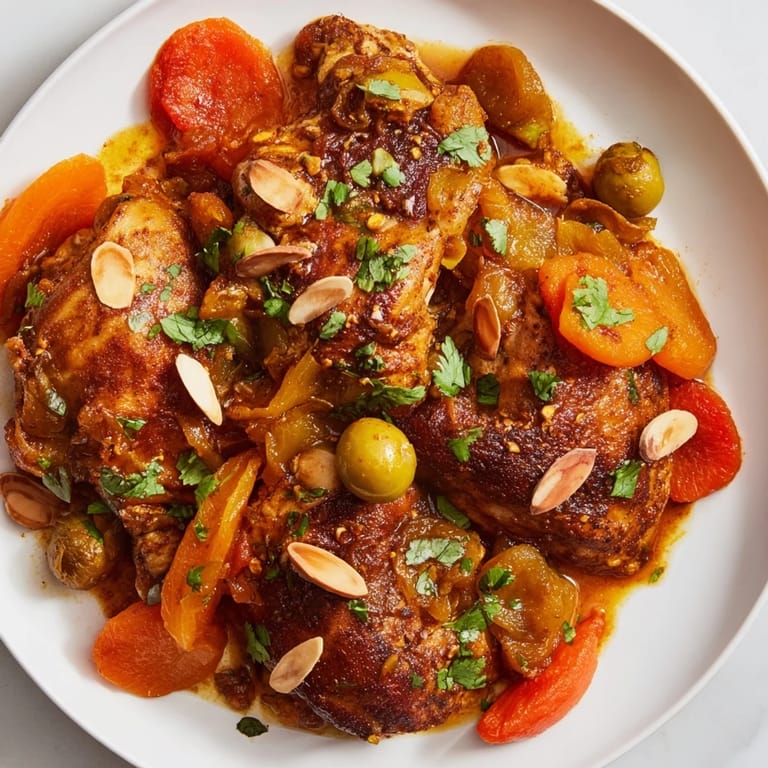
- Bone-in, skin-on chicken thighs: These pieces stay juicy while the skin crisps slightly, holding flavor better than breasts ever could during the long simmer.
- Onion, garlic, and ginger: The holy trinity that builds the base—don't rush the chopping, as the texture matters for how they dissolve into the sauce.
- Dried apricots: Halved, they plump up and add natural sweetness without cloying the dish, balancing the spices beautifully.
- Ground cumin, coriander, cinnamon, paprika, and turmeric: This blend is the soul of the dish; buy them fresh if possible, as old spices fade into whispers.
- Preserved lemon: Optional but transformative, adding a fermented tang that makes people pause mid-bite trying to identify what they're tasting.
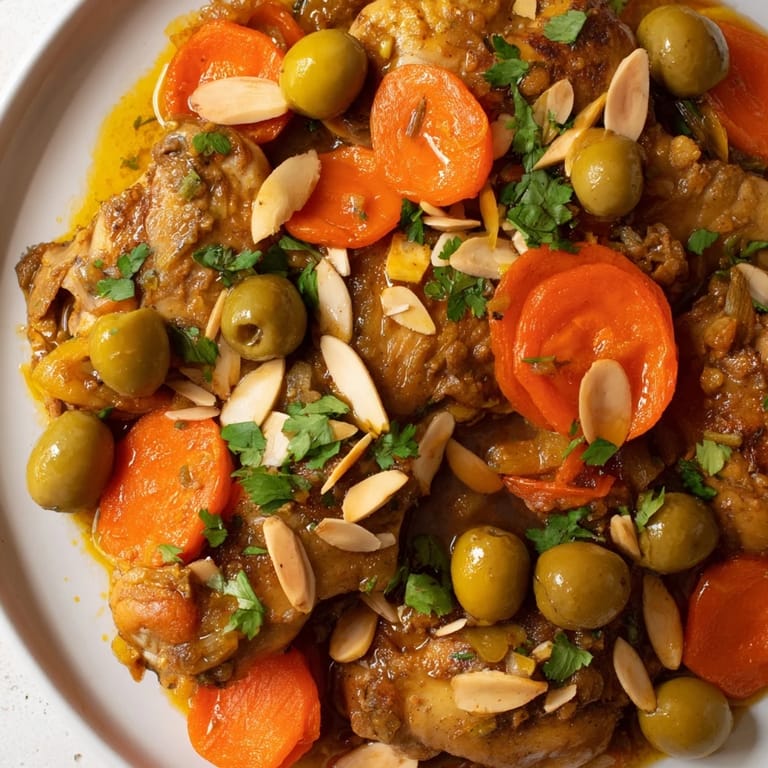
- Green olives: Pitted and halved, they bring brininess and a subtle bitterness that prevents the dish from becoming too sweet.
- Chicken broth and diced tomatoes: Together they create a gentle, slightly tangy braising liquid that clings to every piece of chicken.
- Slivered almonds: Toasted until golden, they add texture and a subtle earthiness that anchors the sweet and savory elements.
Tired of Takeout? 🥡
Get 10 meals you can make faster than delivery arrives. Seriously.
One email. No spam. Unsubscribe anytime.
Instructions
- Dry and season the chicken:
- Pat each thigh completely dry with paper towels—moisture is the enemy of browning. A generous pinch of salt and pepper now means deeper flavor later.
- Brown the chicken:
- Heat olive oil until it shimmers, then lay chicken skin-side down without moving it for several minutes. You're not looking for full cooking, just a golden crust that locks in juices and flavor.
- Build the aromatic base:
- With the chicken temporarily out of the pot, soften your onions and carrots slowly, letting them almost melt into the oil. This patience pays off in subtle sweetness.
- Bloom the spices:
- Add garlic, ginger, and spice blend to the softened vegetables, stirring for just a minute until the kitchen smells alive. This brief cooking releases essential oils and mellows any harshness.
- Deglaze and layer:
- Add tomatoes and scrape the bottom of the pot with a wooden spoon, coaxing all those browned bits into the sauce. This step matters more than most realize—it's where hidden depth lives.
- Simmer together:
- Return chicken, add apricots and broth, then cover and let everything steam gently for 45 minutes. The chicken should be tender enough to pull apart, and the apricots should have surrendered their sweetness to the sauce.
- Finish with olives and reduce:
- Uncover, scatter in olives, and simmer for 10 minutes more while the sauce tightens and deepens. Taste once, adjust salt or spices if needed, and trust your instincts.
 Pin This
 What surprised me most about this dish wasn't the flavors—it was how it brought people together in a way that fancy plating never does. Someone always asks for the recipe, and I always hand it over knowing they'll make it their own, as it should be.
Serving and Pairing
Tagine demands something to soak up the sauce, so serve it over steamed couscous that's been fluffed with a fork and touched with a bit of butter. Warm flatbread works too, offering a different texture that lets people control how much sauce they capture. Rice is fine if that's what you have, though it feels less traditional and slightly less magical.
Making It Your Own
This recipe is a template, not a rulebook, and that's the beauty of it. Some cooks add a pinch of harissa for heat, others swap apricots for dates or figs depending on the season and what they have. A vegetarian version swaps chicken for chickpeas and hearty root vegetables, simmering just as long until everything melds into something warm and complete.
Storage and Reheating
Tagine improves the next day as flavors deepen and mingle. Store it covered in the fridge for up to four days, or freeze it for a month. Reheat gently on the stovetop, adding a splash of broth if the sauce has thickened too much, and taste before serving since flavors can shift slightly after resting.
- Cold leftover chicken shredded over tomorrow's salad tastes surprisingly fresh and interesting.
- If you have preserved lemon, always add it just before serving rather than during cooking so its brightness doesn't fade.
- This dish feeds four generously, with seconds always tempting and thirds rarely refused.
 Pin This
 This tagine is less a recipe and more an invitation to slow down and cook something that whispers instead of shouts. Every time you make it, you'll find your own rhythm and favorite variation, and that's exactly how it should be.
Recipe FAQ
- → What is the best cut of chicken for this dish?
Bone-in, skin-on chicken thighs are ideal as they stay moist and develop rich flavor during slow cooking.
- → Can I make this tagine vegetarian?
Yes, substitute chicken with chickpeas and a variety of root vegetables to keep a hearty texture and taste.
- → What spices give the dish its signature flavor?
Cumin, coriander, cinnamon, paprika, turmeric, and a touch of cayenne create the warm, aromatic profile characteristic of this dish.
- → How do preserved lemons affect the dish?
They add a tangy, citrusy depth that brightens the rich sauce but can be omitted if unavailable.
- → What are some suitable side dishes?
Steamed couscous, fluffy rice, or warm flatbread complement the tagine's rich flavors and soak up the sauce well.
- → Can I adjust the heat level?
Yes, adding harissa or more cayenne pepper can increase spiciness according to your preference.