 Pin This
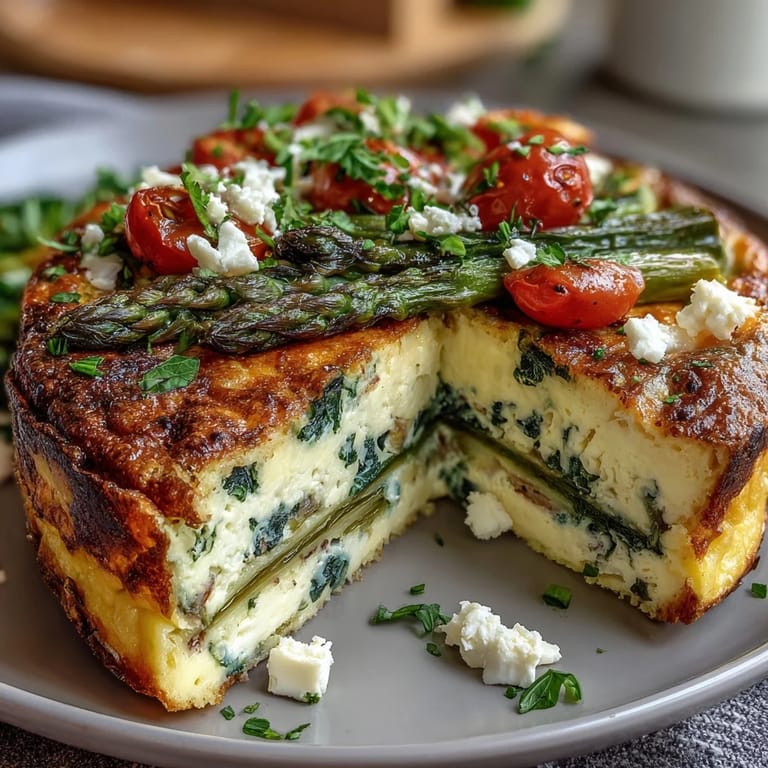
 Last spring, I was rushing to put together something nutritious for unexpected houseguests when I realized my fridge was bursting with fresh vegetables and I had almost nothing else on hand. That's when the frittata saved the day, transforming a handful of asparagus, spinach, and tomatoes into something so vibrant and satisfying that my friends asked for seconds. There's something magical about watching all those bright greens and reds melt into fluffy eggs, creating this one-pan masterpiece that tastes far fancier than its simple ingredient list suggests.
I served this at a spring brunch last April, and watching people dig in while the herb flavors were still singing felt like a small victory in the kitchen. One guest mentioned she never thought to cook vegetables and eggs together like this, and suddenly the recipe felt less like breakfast and more like an invitation to rethink what's possible in a single pan.
Ingredients
- Asparagus: Trim the tough woody ends by bending until they snap naturally, then cut into bite-sized pieces so they cook evenly in the time it takes the eggs to set.
- Baby spinach: Buy it pre-washed if you can, because the handful of minutes saved matters when you're juggling six other things on a weekday morning.
- Cherry tomatoes: Halving them prevents the frittata from becoming watery, and their sweetness plays beautifully against the salty feta.
- Zucchini: Dice it small so it softens without turning into mush, and use a vegetable with some firmness rather than one that's been sitting around for a week.
- Red onion: The sharper bite cuts through the richness of eggs and cheese, but if you prefer something gentler, a white or yellow onion works too.
- Eggs: These are the foundation, so use the freshest ones you can find, and room-temperature eggs will blend more smoothly with the milk.
- Milk: A splash of dairy or non-dairy milk makes the eggs lighter and fluffier, though honestly you can skip it if you're in a pinch.
- Feta cheese: Crumbled feta adds a tangy richness that no other cheese quite replaces, but if you're dairy-free, a good cashew cheese works surprisingly well.
- Fresh parsley and chives: These herbs are what make people say your frittata tastes like spring, so resist the urge to skip them or use dried.
- Olive oil: Use your good olive oil here since its flavor won't be buried in a long cooking process.
Tired of Takeout? 🥡
Get 10 meals you can make faster than delivery arrives. Seriously.
One email. No spam. Unsubscribe anytime.
Instructions
- Heat your oven and pan:
- Start with a 375°F oven so it's ready when you need it, and use a 10-inch oven-safe skillet that you trust will handle the stovetop-to-oven transition gracefully. If you're not sure whether your skillet is oven-safe, now is the time to check the bottom or handle for reassurance.
- Sauté your base:
- Heat olive oil over medium warmth, then add red onions and let them soften for about two minutes until they smell sweet and turn translucent. This builds flavor rather than starting cold, and it only takes a moment.
- Cook the sturdy vegetables:
- Toss in the asparagus and zucchini with a pinch of salt, stirring every so often for three to four minutes until they begin to soften but still hold their shape. You'll know they're ready when a fork pierces them with just a gentle pressure.
- Wilt in the delicate vegetables:
- Scatter the spinach and cherry tomato halves across the pan and let them cook for a minute or two until the spinach darkens and softens. This should feel quick and effortless.
- Prepare your egg mixture:
- Whisk together the eggs, milk, salt, pepper, and red pepper flakes in a separate bowl until the mixture is uniform and pale. Take a moment to taste it or simply trust your seasoning, because once it hits the hot pan you won't be able to adjust.
- Combine and top:
- Pour the egg mixture evenly over all those vegetables, making sure it flows into the empty spaces, then sprinkle feta cheese, parsley, and chives across the top like you're finishing a painting. The frittata should bubble gently around the edges within a minute or two.
- Start on the stovetop:
- Let the skillet sit over medium heat for about two to three minutes until you see the edges setting and firming up, but the center will still look quite wet. This head start means the oven won't need to work as hard later.
- Finish in the oven:
- Transfer to your preheated 375°F oven and let it bake for ten to twelve minutes until the center no longer jiggles when you gently shake the pan and the top turns a light golden color. The exact timing depends on your oven's personality, so use visual cues rather than a clock.
- Rest and serve:
- Pull the skillet from the oven using oven mitts and let it cool for just a few minutes so the frittata sets fully and becomes easier to slice. Serve it warm, at room temperature, or even cold the next day straight from the fridge.
 Pin This
 There's a moment right when you pull a frittata from the oven where steam rises and the kitchen smells like fresh herbs and golden eggs, and in that moment you understand why people gather around tables to share food. This dish has become my answer whenever someone says they're tired of the same breakfast routine, because it proves that simple ingredients in the right arrangement become something memorable.
Seasonal Variations That Keep Things Fresh
Spring brings asparagus and peas, summer offers zucchini and tomatoes at their peak, and fall welcomes mushrooms and leeks into the mix. Winter calls for heartier vegetables like broccoli, cauliflower, or caramelized onions, transforming the frittata into something cozier. The beauty of this recipe is that it bends to whatever your market offers, so you can make it year-round without feeling like you're repeating yourself.
Making It Work for Your Dietary Needs
Swap regular milk for coconut, almond, or oat milk without changing a thing, and the frittata stays creamy and light. Replace feta with a dairy-free cheese, nutritional yeast sprinkled throughout, or simply leave the cheese out entirely and lean on the herbs for boldness. Once you understand the basic structure, you can adapt it to accommodate allergies, preferences, or whatever you have on hand.
How to Store and Reheat Your Frittata
A cooled frittata keeps well covered in the refrigerator for three to four days, making it ideal for grab-and-go breakfasts or light dinners when you're too tired to cook. Slice it into wedges, place on a small plate, and warm gently in a 300°F oven for five to seven minutes, or simply enjoy it cold if you're in a hurry and don't mind the texture shift.
- Wrap individual slices in parchment or foil rather than stacking them, so they don't stick together when you pull them apart.
- If you're meal prepping, let the frittata cool completely before storing to prevent condensation that makes it soggy.
- Serve with a simple salad, crusty bread, or a side of fruit to turn leftovers into a complete meal.
 Pin This
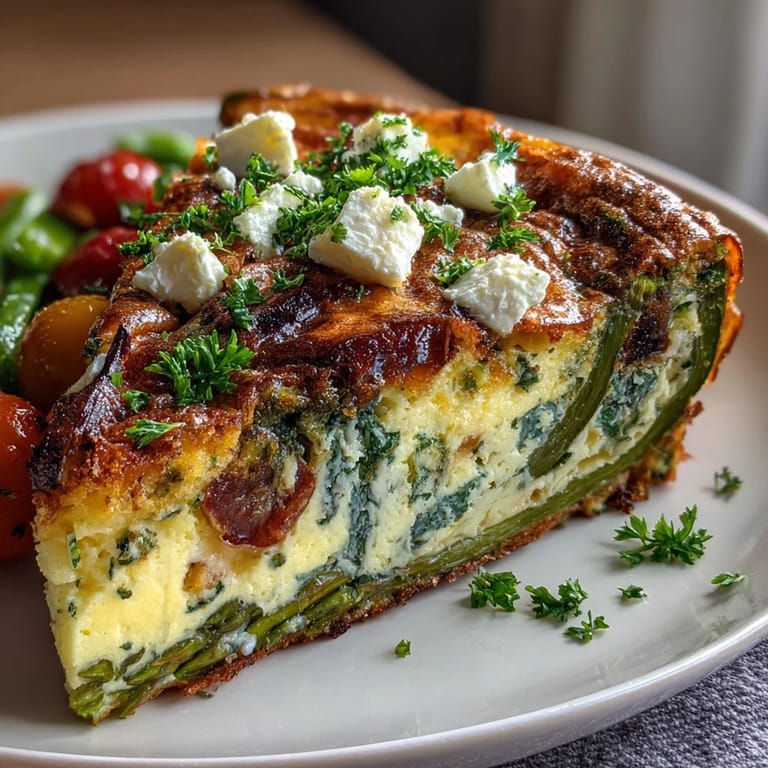
 This frittata has quietly become the recipe I reach for when I want to feel like I'm taking care of myself and the people I cook for. It's honest food that tastes like spring tastes.
Recipe FAQ
- → Can I substitute the feta cheese?
Yes, for a dairy-free option, you can replace feta with a plant-based cheese or omit it entirely while maintaining flavor with herbs.
- → What vegetables work well in this dish?
Asparagus, baby spinach, zucchini, cherry tomatoes, and red onion create a fresh medley, but seasonal veggies like peas or leeks can be swapped in.
- → How should I cook the vegetables for best texture?
Sauté the onions first until softened, then cook the asparagus and zucchini until just tender before adding spinach and tomatoes to wilt gently.
- → Is this frittata suitable for gluten-free diets?
Yes, all ingredients used are naturally gluten-free, making it a safe choice for gluten-sensitive individuals.
- → Can I prepare this ahead of time?
Vegetables can be prepped and sautéed in advance. Assemble and bake shortly before serving to maintain freshness and texture.