 Pin This
 I'll never forget the year I decided to reimagine our Thanksgiving table. My grandmother's traditional turkey seemed tired, predictable, and honestly, a bit lonely on the plate. That's when I discovered the magic of roasting everything together—turkey, root vegetables, all of it glistening in earthy spices and arranged like a beautiful chain linking us all back to those harvest tables of centuries past. Now, every time I make this dish, I'm not just cooking dinner. I'm weaving a story of gratitude and connection right there on the platter.
I remember my sister's face when she saw the platter emerge from the kitchen that first year—her eyes went wide, and she actually gasped. She thought I'd hired a caterer. That's the moment I realized this dish had become something more than just food. It became the centerpiece of our family's conversation, the thing everyone asked about before they even sat down to eat.
Ingredients
- Boneless turkey breast, skin on: Don't skip the skin—that's where the flavor and moisture hide. A full 1.5 kg gives you enough presence on the plate without the hours of prep that a whole bird demands. Look for one that's relatively uniform in thickness so it cooks evenly
- Olive oil: Use your good olive oil here, not the cheap bottle. It's going to be one of the main flavor carriers once everything hits the oven
- Dried thyme and sage: These are the herbs that whisper autumn into every bite. Fresh would be lovely, but dried holds its power through the roasting heat
- Carrots: Choose ones that are vibrant orange and firm to the touch. Cut them generously into 1-inch pieces so they don't disappear into nothing
- Parsnips: These are my secret weapon—nobody expects their subtle sweetness, but everyone notices when it's missing. They get creamy inside with a slight char on the edges
- Sweet potatoes: The bridge between the savory and slightly sweet, these add visual warmth with their orange hue
- Celery root (celeriac): This is the earthy backbone. It's humble looking, but it roasts into something deeply comforting and complex
- Smoked paprika and cumin: These spices are what make people wonder if you've somehow unlocked a hidden flavor dimension. The paprika adds color and smokiness, while cumin brings a warm earthiness that ties everything together
- Soy sauce or tamari: Just a touch of umami magic in the gravy. It deepens everything without being obvious about it
- Fresh parsley and toasted pecans: These finish the dish with brightness and a gentle crunch that makes people pause mid-bite
Tired of Takeout? 🥡
Get 10 meals you can make faster than delivery arrives. Seriously.
One email. No spam. Unsubscribe anytime.
Instructions
- Set your stage:
- Preheat your oven to 200°C (400°F). Take a moment to get your roasting pan and baking sheet positioned on separate racks—this is going to matter. You want good heat circulation all around
- Season the turkey like you mean it:
- Pat your turkey breast dry with paper towels—this is the step people skip, and it changes everything. Rub it generously with olive oil, then work the thyme, sage, salt, and pepper all over, getting into every crevice. Let your hands feel the skin, really massage those seasonings in. You're not just coating it; you're infusing it
- Begin the turkey's journey:
- Place that golden-seasoned breast skin-side up in your roasting pan. Slide it into the oven and roast for 1 hour and 15 minutes. You'll know it's done when a meat thermometer inserted into the thickest part reads 74°C (165°F). If the skin starts getting too dark before the meat is done, drape a tent of foil over it loosely. This is about protection, not steaming
- Prepare the root vegetables while the turkey sings:
- Cut your vegetables into 1-inch pieces—consistency matters here because it ensures even cooking. Toss them all together in a large bowl with olive oil, smoked paprika, cumin, salt, and pepper. Get your hands in there and make sure every piece is coated. Spread them on a baking sheet in a single layer, not crowded. They need space to breathe and caramelize, not steam
- Roast those vegetables to golden perfection:
- Into the oven they go for 40 to 45 minutes. About halfway through, give them a good stir. You're looking for golden edges and tender centers. The parsnips will turn almost translucent in places, the carrots will develop a deep caramelized sweetness, and the celery root will become impossibly creamy
- Create the gravy that holds it all together:
- While everything roasts, you can make the gravy whenever you're ready. Melt butter in a saucepan over medium heat—let it get foamy and rich smelling. Whisk in cornstarch until you have a smooth paste, then start adding your stock slowly, whisking constantly. This is where patience matters. Rushing it means lumps, and lumps mean disappointment. Once it's smooth and simmering, stir in the soy sauce. Let it bubble gently for 5 to 7 minutes until it thickens enough to coat the back of a spoon. Taste it. Adjust salt and pepper like you're fine-tuning a favorite song
- Let the turkey rest and breathe:
- Once your turkey hits that magic internal temperature, pull it out and cover it loosely with foil. Let it rest for 15 minutes. This isn't wasted time; this is when the fibers relax and the juices redistribute. You'll get tender, juicy slices instead of dry ones
- Assemble your masterpiece:
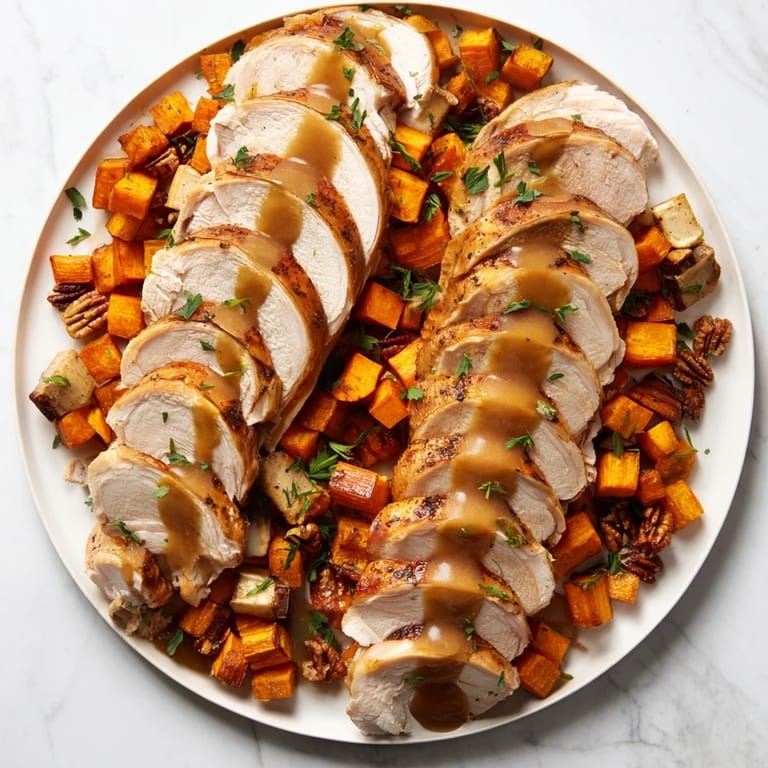
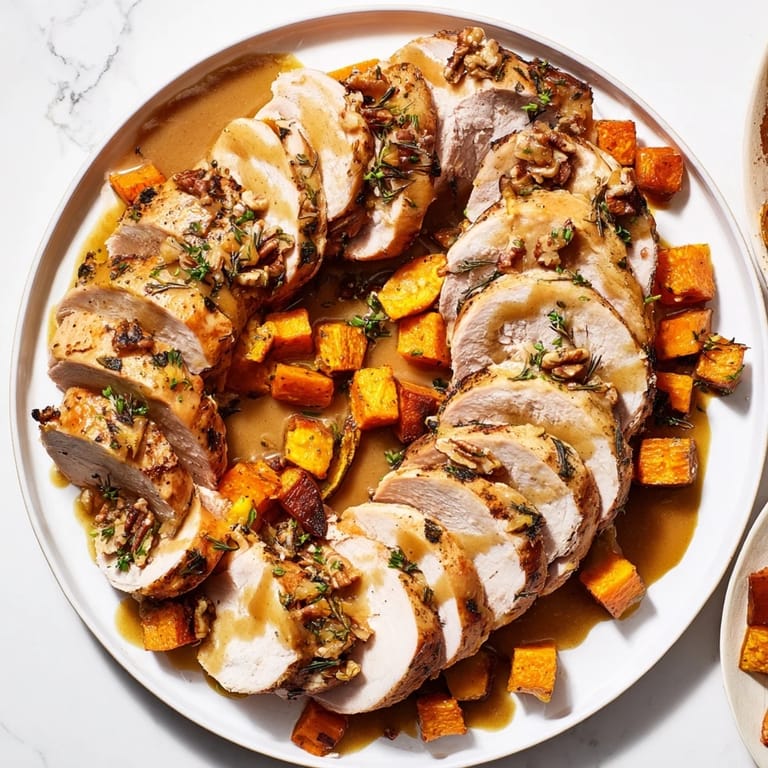
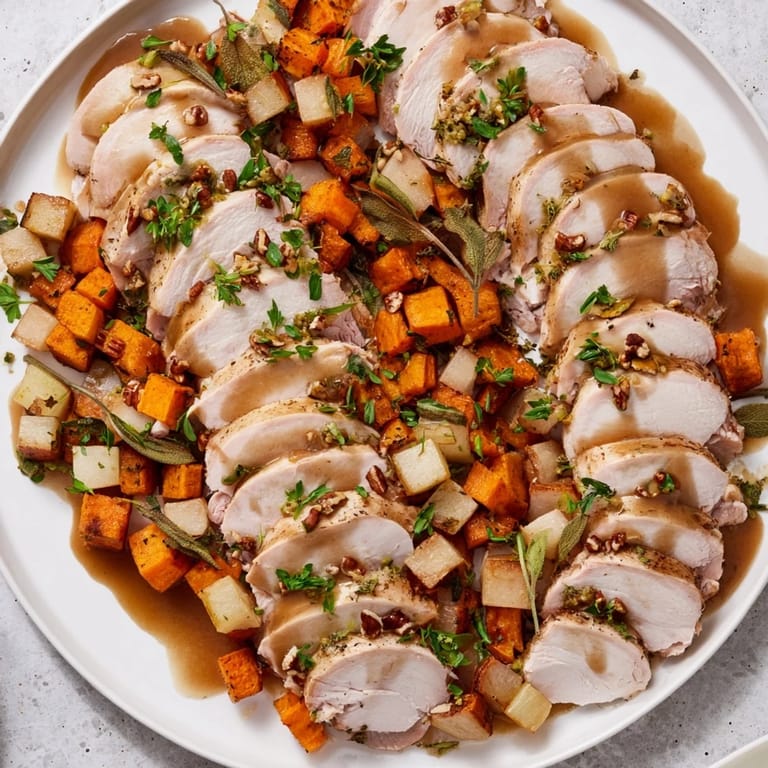
- This is where the magic happens. Slice your rested turkey into beautiful pieces. On a large platter, arrange everything in overlapping rows—turkey slices, then a row of roasted vegetables, then turkey again, creating this beautiful chain-like pattern that tells the story of journeys and connections. Drizzle that silky gravy all over, letting it pool in the valleys. Finish with a shower of fresh parsley and those toasted pecans. Step back and look at what you've created
 Pin This
 There's something magical about watching people's faces when they see this dish. It's not just the visual beauty of those overlapping chains—it's the realization that what looked complicated was actually accessible to them. A woman at my table last year told me she'd assumed she could never make something this elegant. Now she makes it every holiday. That's when food becomes more than sustenance; it becomes permission to try.
About the Chain Arrangement
The chain-like presentation isn't just pretty—it's meaningful. Each overlapping piece represents a connection, a link in the chain stretching back to shared tables and forward to the ones you love sitting around yours. I arrange it like I'm telling a story, starting from one end of the platter and building toward the other. The vegetables and turkey become a visual metaphor for how we're all connected, all part of something larger. When you place that first piece, think about the hands that grew it, the journey it took to reach your kitchen. That consciousness of connection changes how the food tastes.
Variations That Keep Things Interesting
The first year I made this, I thought it had to be exactly as written. Now I understand it's more of a framework, a starting point for your own creativity. Some years I add roasted Brussels sprouts halved and tossed with the other vegetables—their slight bitterness plays beautifully against the sweet parsnips. Other times, I roast beets separately to avoid turning everything pink, but their earthy sweetness adds another flavor dimension. Once, I added a handful of pomegranate seeds at the very end, which added this unexpected brightness and tartness that made everyone pause and ask what that was. The core recipe—the turkey, the spices, the gravy method—that stays constant. Everything else is your canvas.
- If you're serving vegetarians, substitute the turkey with thick-cut portobello mushroom caps that you brush with oil and roast alongside everything else
- A drizzle of quality balsamic vinegar across the finished platter adds an elegant tang that echoes the cranberry sauce you'll likely serve on the side
- Fresh thyme sprigs scattered on top right before serving add an herbaceous aroma that greets your guests before they even taste it
The Gravy Is Everything
I've learned that gravy is where the entire meal either comes together or falls apart. The technique is simple, but it demands your attention. That soy sauce you add isn't about making it taste salty—it's about depth. Soy brings umami, that savory fifth taste that makes people unable to stop eating. The cornstarch creates a silky mouthfeel that makes you want another spoonful. I always make extra gravy because people want more than you'd expect, and having it in a warm boat on the table means no one feels shy about going back for more.
Why This Dish Found Its Way Into My Heart
This recipe exists because I wanted to create something that honored tradition while feeling completely new. Every element has a reason for being there, every spice, every vegetable. The roasted root vegetables represent the autumn harvest. The turkey is the centerpiece that feeds a crowd. The chain arrangement speaks to our interconnection. And the gravy? The gravy is liquid gratitude, tying everything together into something warm and nourishing. When you serve this, you're not just feeding people. You're sharing a moment, a memory, a story.
- Make sure your oven temperature is accurate—use an oven thermometer if you have one, especially for the turkey
- Prep all your vegetables the night before if you're cooking for a crowd; it removes morning stress and lets you focus on enjoying your guests
- If your guests have different dietary needs, the vegetables side is entirely adaptable, and the turkey speaks for itself
 Pin This
 This dish has taught me that cooking for others is an act of love that doesn't have to be complicated. When you serve something this beautiful and delicious, you're giving people permission to feel special. That's the real gift.
Recipe FAQ
- → What root vegetables work best in this dish?
Carrots, parsnips, sweet potatoes, and celery root provide a sweet and earthy balance and roast beautifully for tender results.
- → How is the turkey seasoned before roasting?
The turkey breast is rubbed with olive oil, dried thyme, sage, salt, and pepper to enhance its natural flavors and retain moisture during roasting.
- → What is the best way to prepare the gravy?
Butter and cornstarch are whisked to form a roux, then stock and soy sauce are added gradually and simmered until thickened, resulting in a flavorful, smooth sauce.
- → Can pecans be omitted from the garnish?
Yes, pecans are optional and can be left out or replaced with toasted seeds for texture without affecting the main flavors.
- → Is there a vegetarian alternative for this dish?
Roasted portobello mushrooms can replace the turkey, and vegetable stock can be used for the gravy to maintain depth and savoriness.