 Pin This
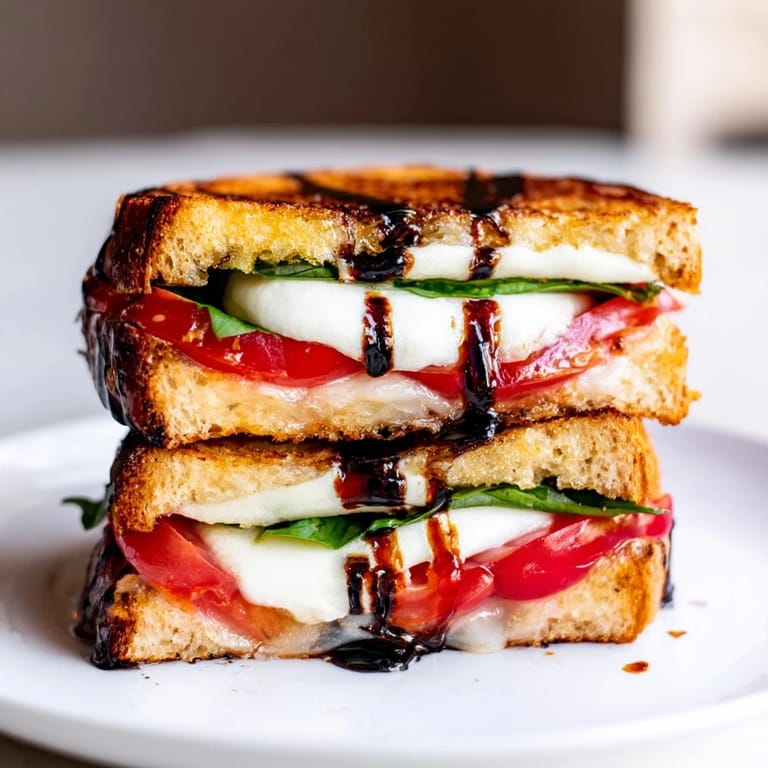
 There's something magical about the moment when you realize a sandwich can be elevated beyond ordinary. One Tuesday afternoon, I was staring at ripe tomatoes on the counter and a block of fresh mozzarella, thinking how much they belonged together, when it hit me—why not turn them into a grilled cheese? The buttery, golden exterior protecting all that Italian freshness inside felt like a small revelation in my kitchen.
I made this for my neighbor who complained her lunches had become boring, and watching her face when she bit into that first golden-brown slice, with the balsamic dripping slightly onto her plate, reminded me why simple food matters. She called me the next day asking for the proportions again.
Ingredients
- Sourdough or Italian bread: Use 4 slices total, and pick loaves with a sturdy crumb that can hold up to butter and melting cheese without becoming soggy.
- Fresh mozzarella cheese: 4 oz total, sliced thick enough to hold its shape but thin enough to melt in the pan—about quarter-inch slices work beautifully.
- Unsalted butter, softened: 2 tbsp allows you to spread it evenly without tearing the bread, and the gentle heat creates that essential golden crust.
- Ripe tomato: One large tomato, sliced thin so the juices mingle with the warm cheese without making the sandwich fall apart.
- Fresh basil leaves: 8 to 10 leaves—this is where your nose tells you the truth; choose ones with that grassy, peppery scent.
- Balsamic glaze: 1 tbsp for layering, plus extra for finishing, and yes, the glaze matters more than you'd think because it brings tang that cuts through the richness.
- Salt and freshly ground black pepper: To taste, but go light here—the tomato and basil are already singing.
Tired of Takeout? 🥡
Get 10 meals you can make faster than delivery arrives. Seriously.
One email. No spam. Unsubscribe anytime.
Instructions
- Butter your bread:
- Lay all four slices out in front of you and spread softened butter evenly on one side of each, using enough that you can see it coating the bread but not so much that it slides around.
- Assemble the insides:
- Place two slices butter-side down, then layer mozzarella first, then tomato slices, then basil leaves—this order matters because the cheese creates a seal that keeps the tomato's moisture from soaking the bread. Drizzle a small stream of balsamic glaze over the layers, then sprinkle with salt and pepper so lightly you're barely dusting.
- Seal the sandwich:
- Place the remaining two bread slices on top with the buttered side facing up, creating a complete sandwich with butter on the outside, ready for the pan.
- Heat your pan:
- Use a large nonstick skillet or grill pan, set it to medium heat, and let it warm for a full minute—you'll know it's ready when a drop of water sizzles and disappears immediately.
- Cook until golden:
- Carefully place the sandwiches in the pan and cook for 3 to 4 minutes per side, pressing down gently with a spatula so the bread makes full contact with the heat. You're listening for a gentle sizzle, watching for that butter turning deep golden brown, and catching the exact moment the cheese starts oozing slightly from the edges.
- Finish and rest:
- Remove the sandwiches to a cutting board and let them rest for exactly one minute—this prevents the melted cheese from running out when you slice. Slice diagonally if you're feeling fancy, then drizzle with a final thread of balsamic glaze and serve immediately.
 Pin This
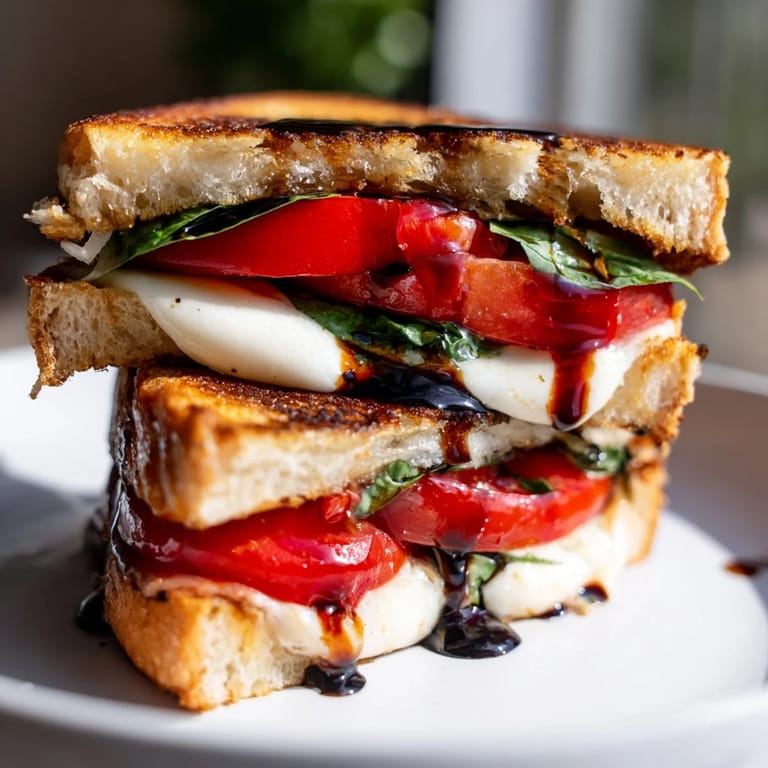
 There was a moment, maybe halfway through making these sandwiches for the first time, when I realized I was about to combine two completely different food worlds and they actually belonged together. That's the kind of small kitchen discovery that makes you feel like a real cook.
Why Fresh Basil Changes Everything
Dried basil will technically work, but it transforms this sandwich into something entirely different—more muted, more one-note. Fresh basil brings this peppery liveliness that somehow makes the melted cheese taste creamier and the tomato taste juicier, even though nothing has changed except the basil itself. I learned this the hard way by grabbing a jar of dried basil one morning when I was out of fresh, and the sandwich was fine but felt like it was wearing someone else's clothes.
The Balsamic Glaze Trick
Balsamic glaze might seem like a fancy flourish, but it's actually doing serious work here by adding acidity and slight sweetness that prevents the sandwich from tasting heavy or one-dimensional. The glaze reduces down so much that it becomes almost syrupy, and just a drizzle before cooking and another after creates layers of flavor that seem disproportionate to how little you're actually using. If you can't find it at the store, a regular balsamic vinegar works, though you might need to use a little less since it's not reduced.
Bread Matters More Than You Think
Sourdough gives you a tangy undertone that plays beautifully with the Italian flavors, while a plain Italian bread lets the cheese, tomato, and basil take center stage without competition. The bread needs enough structure to support the weight of the fillings and the heat of the pan, which is why soft sandwich bread will turn to mush and tough, industrial ciabatta can fight against your teeth. Your best bet is bread with an open crumb and sturdy crust—something you'd be happy eating on its own, because you kind of are.
- Avoid anything pre-sliced and plastic-wrapped unless you're genuinely in a rush.
- If your bread is straight from the bakery and still warm, let it cool for 10 minutes so it firms up slightly.
- Day-old bread often works better than fresh because the structure has set.
 Pin This
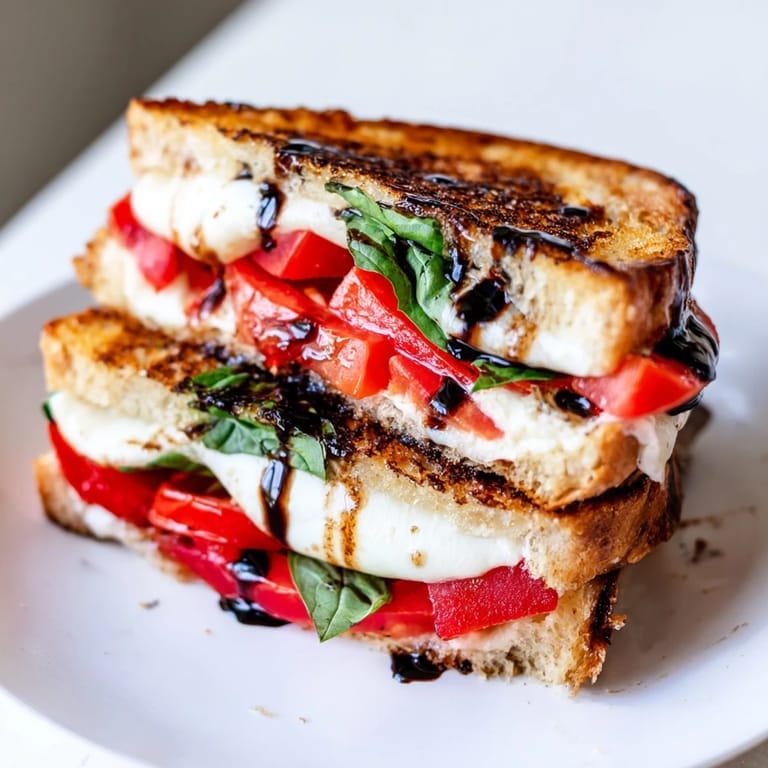
 There's something deeply satisfying about pulling a warm grilled cheese off the pan and knowing that inside, everything is exactly where it should be. This version feels like it was always meant to exist.