 Pin This
 My first proper fish and chips didn't happen in a London pub—it was in my tiny student kitchen with a borrowed deep fryer and my mate shouting encouragement from the other room. The smell of hot oil mingling with vinegar became synonymous with Friday nights, those moments when we'd forget about essays and bills and just focus on getting the batter golden. There's something about watching fish transform from pale fillet to golden-crusted treasure that makes you feel like you've actually accomplished something in the kitchen.
Years later, I made this for my dad on his birthday because he'd mentioned missing the fish and chips from his favorite closed-down chippy. Watching him take that first bite and close his eyes—that's when I realized this dish isn't really about technique, it's about showing someone you care enough to get the small details right.
Ingredients
- White fish fillets (cod or haddock): These mild, flaky fish are your foundation—they stay tender inside while the batter crisps up around them, and the delicate flavor won't overwhelm anyone at the table.
- All-purpose flour and cornstarch: Cornstarch is the secret weapon here; it keeps the batter lighter and crispier than flour alone, so don't skip it or use one in place of the other.
- Baking powder: This creates tiny air pockets in the batter that fry up golden and bubbly, giving you that signature crunch.
- Cold sparkling water: Cold is essential—it keeps gluten from developing too much and makes the batter lighter; beer works beautifully if you want a richer, more complex flavor.
- Russet or Maris Piper potatoes: Maris Piper are traditional and starchy enough to get fluffy inside, but russets work just as well if that's what you've got on hand.
- Sunflower or vegetable oil: Choose a neutral oil with a high smoke point—you need it to stay stable at frying temperatures without imparting any flavor.
- Malt vinegar: A dash of this makes the whole dish come alive, cutting through the richness in a way that lemon alone can't quite achieve.
Tired of Takeout? 🥡
Get 10 meals you can make faster than delivery arrives. Seriously.
One email. No spam. Unsubscribe anytime.
Instructions
- Soak your chips:
- Cut your potatoes into thick fries—think chunky, not thin and delicate—and soak them in cold water for at least 15 minutes. This removes excess starch and prevents them from sticking together while frying.
- First fry at lower heat:
- Heat your oil to 150°C (300°F) and cook the potatoes in batches for 4–5 minutes until they're soft inside but still pale. This parcookes them so they'll have time to crisp up properly on the second fry without burning.
- Make your batter:
- Whisk flour, cornstarch, baking powder, salt, and pepper together, then gradually add cold sparkling water, whisking until it's smooth and thick enough to coat the back of a spoon. Don't overmix—lumps are fine and actually create a lighter batter.
- Finish the chips:
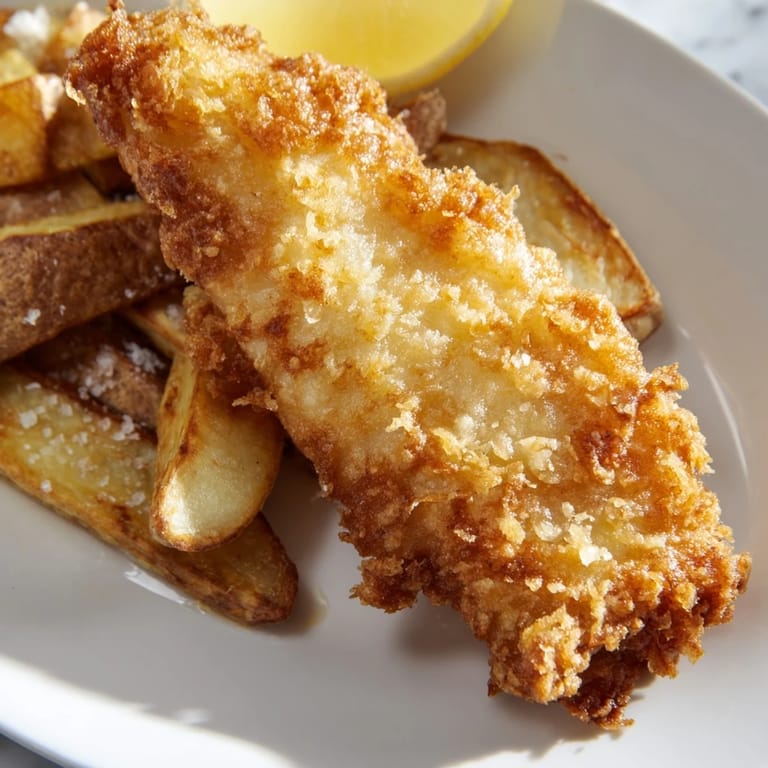
- Increase oil temperature to 190°C (375°F) and fry your parcooked chips again for 2–3 minutes until they're golden and crispy, then drain on paper towels and season immediately with sea salt while they're still hot.
- Prepare and batter the fish:
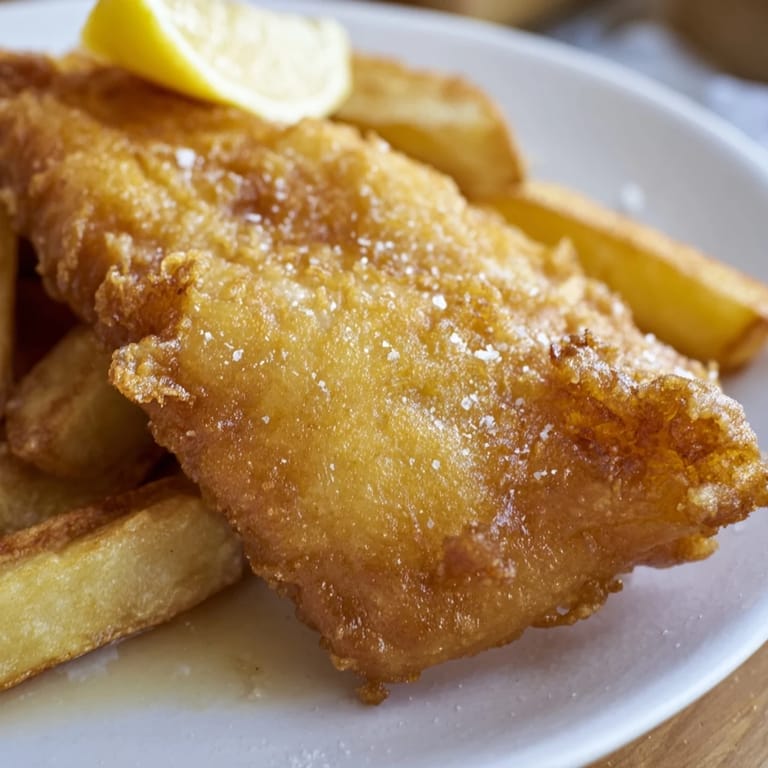
- Pat your fillets completely dry with paper towels (moisture is the enemy of crispiness), dust lightly with flour, then dip each piece into the batter, letting excess drip off before carefully lowering it into the hot oil.
- Fry until golden:
- Cook each fillet for 5–7 minutes, turning once halfway through, until the batter is deep golden and crispy all over. Work in batches so you don't crowd the pan and drop the oil temperature.
- Drain and serve:
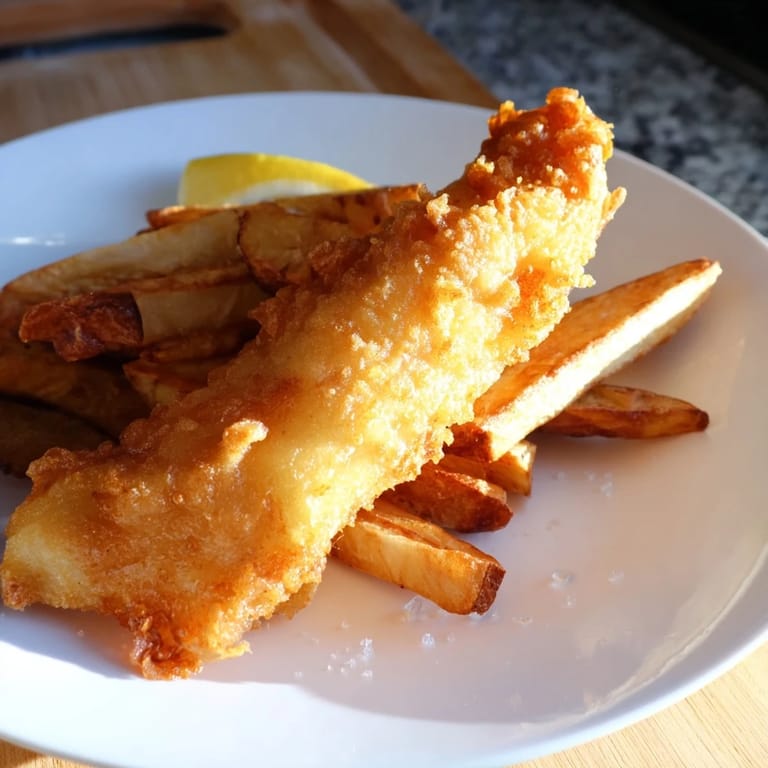
- Remove the fish to a wire rack or paper towels to drain away any excess oil, then serve everything hot with malt vinegar or lemon wedges.
 Pin This
 I learned the hard way that timing matters; when friends arrived one evening and I'd made everything in advance, cold chips met lukewarm fish, and the magic vanished. Now I've learned to have everything ready to plate the moment the last piece comes out of the fryer—this is the one dish where speed is part of the recipe.
The Two-Fry Method Explained
The reason this dish works so brilliantly comes down to those two separate frying temperatures. That first gentle fry at 150°C cooks the potato all the way through without coloring it, and then the second blast at 190°C creates the crispy exterior you're after. I used to fight this technique, thinking it was unnecessarily fussy, until I realized it's not an extra step—it's the whole point. Once you understand why it matters, it stops feeling like work and becomes a sort of meditative kitchen ritual.
Batter Science and Beer Magic
The sparkle in sparkling water does real work; those tiny bubbles create lift in the batter that stays trapped when it hits the hot oil, making it crispy rather than dense. If you swap in beer, the fermentation adds a subtle depth that makes people ask what you did differently. I tested this obsessively one weekend, frying batch after batch with different liquids, and the beer version kept winning—just remember that it needs to be cold, or you're losing those crucial bubbles before you even start frying.
Vinegar, Lemon, and the Details That Matter
Malt vinegar isn't just a topping—it's an essential part of the equation, cutting through richness and making every bite feel lighter than it is. Lemon works too, but it hits differently, more sharp and bright; malt vinegar has this gentle, almost sweet tang that's been paired with fish and chips for a reason. The choice might seem small, but that's where this dish lives—in the small choices that somehow make all the difference.
- Add a pinch of sea salt to your hot chips immediately after draining so it sticks while they're steaming.
- If you're serving tartar sauce, make or buy it fresh; cold sauce on hot food creates a moment of textural contrast that makes the whole plate sing.
- Keep your oil clean by fishing out any batter bits between batches so they don't burn and impart a bitter flavor.
 Pin This
 This dish has become my answer to the question "what's your comfort food?" because it combines technical skill with pure joy. When you nail it—when the batter shatters between your teeth and steam rises from the fluffy interior—you remember why you love cooking.
Recipe FAQ
- → How do you achieve a crispy batter for the fish?
Use cold sparkling water or beer in the batter to create light bubbles. Also, keep the batter smooth and avoid overmixing for a crispy texture.
- → Why double fry the chips?
Double frying ensures the chips are soft inside and crispy outside. The first fry cooks the potato through, the second fry crisps the surface.
- → Can I use other types of fish?
Yes, firm white fish like cod or haddock works best due to their mild flavor and firm texture.
- → What oil is best for frying fish and chips?
Sunflower or vegetable oil with a high smoke point is ideal for deep frying to maintain a clean, crispy result.
- → How do I keep the fries from becoming soggy?
Soak the cut potatoes in cold water before frying to remove excess starch, then thoroughly dry them before the first fry.