 Pin This
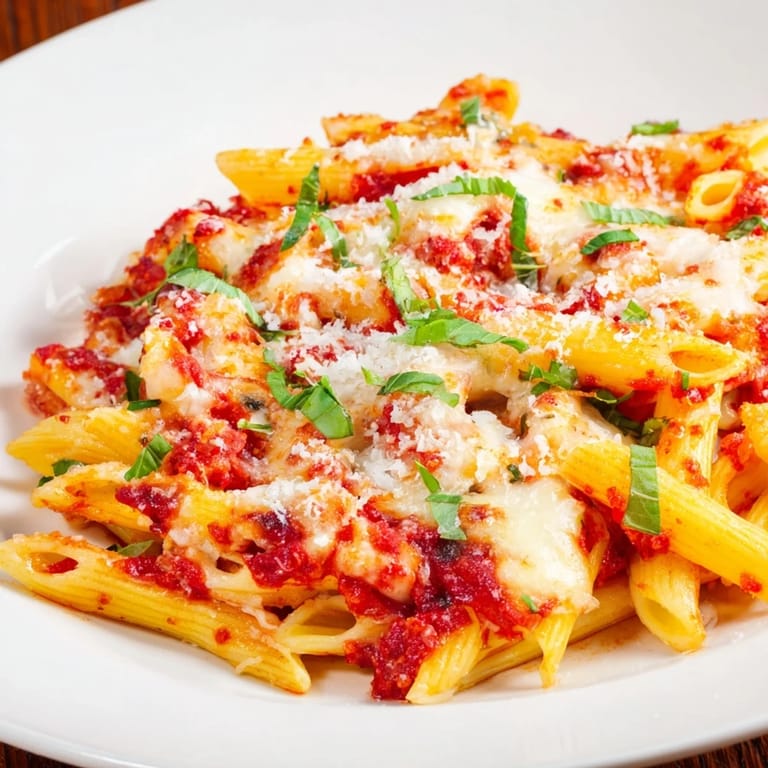
 My neighbor Marco showed up one evening with a container of San Marzano tomatoes from his garden and a challenge: make something that didn't require a long simmer. Arrabbiata seemed obvious, but I wondered what would happen if I baked it instead of serving it loose over pasta. Twenty minutes in the oven later, the cheese had turned golden, the sauce bubbled at the edges, and Marco was asking for the recipe before he'd even finished his first bite.
Last winter, I made this for a dinner where everyone arrived half-frozen from the cold. I pulled it from the oven just as they walked in, and the steam rising off the baking dish seemed to warm the whole room before anyone even sat down. That's when I realized this dish does something beyond feeding people—it creates a moment.
Ingredients
- Penne pasta, 350 g: Buy the good stuff if you can, the kind that has some texture to it. It holds the sauce better than the super-smooth varieties, and it doesn't turn mushy when it bakes.
- Olive oil, 2 tbsp: This is your fat base, so don't use the cheap bottle at the back of the cabinet. A decent extra virgin oil makes a real difference.
- Garlic, 4 cloves finely chopped: Don't mince it into dust; you want small pieces that perfume the oil without burning and turning bitter.
- Crushed red pepper flakes, 1–2 tsp: Start with one teaspoon unless you know you like serious heat. You can always add more, but you can't take it back.
- Canned crushed tomatoes, 800 g: Use the kind with no added sugar or garlic if you can find it. San Marzano varieties tend to be sweeter and less acidic.
- Sugar, 1 tsp: This balances the acidity of the tomatoes, not to make it sweet but to let the tomato flavor sing.
- Dried oregano, 1 tsp: The dried version is stronger than fresh, so measure carefully or you'll taste mostly oregano.
- Salt and black pepper: Taste as you go. The cheese at the end will add salt, so don't over-season the sauce.
- Fresh basil, small bunch chopped: Save a little for the top; it adds color and a bright note that cuts through the richness of the cheese.
- Parmesan cheese, 80 g grated: Grate it fresh if you have the patience. The pre-grated stuff has anti-caking agents that keep it from melting quite as smoothly.
- Mozzarella cheese, 150 g shredded: Use low-moisture mozzarella if you can; it browns better and won't release water that makes everything soggy.
Tired of Takeout? 🥡
Get 10 meals you can make faster than delivery arrives. Seriously.
One email. No spam. Unsubscribe anytime.
Instructions
- Get your oven ready:
- Set it to 200°C (400°F) and let it heat while you prep. Grease a large baking dish with a little oil or butter so nothing sticks.
- Cook the pasta:
- Bring a big pot of salted water to a rolling boil and drop in the penne. Cook it for about 2 minutes less than the package says—it should still feel a bit firm when you bite it because it'll soften more in the oven.
- Build the sauce:
- While the pasta cooks, warm the olive oil in a large skillet over medium heat. Add the garlic and red pepper flakes, stirring often until the kitchen smells incredible but nothing's turned brown. If it starts to brown, pull it off the heat for a moment.
- Simmer and season:
- Pour in the tomatoes, sugar, oregano, salt, and pepper. Let it bubble gently for 10 to 12 minutes, stirring now and then, until it's slightly thicker and the raw tomato taste has mellowed. Taste it and adjust the heat and salt.
- Bring it together:
- Stir the basil into the sauce, then add the drained pasta and toss everything until the pasta's completely coated. Every piece should have sauce clinging to it.
- Build the layers:
- Spread half the pasta mixture into the baking dish. Scatter half the Parmesan and mozzarella over it. Add the rest of the pasta on top, then finish with the remaining cheeses, spreading them so they cover everything evenly.
- Bake until golden:
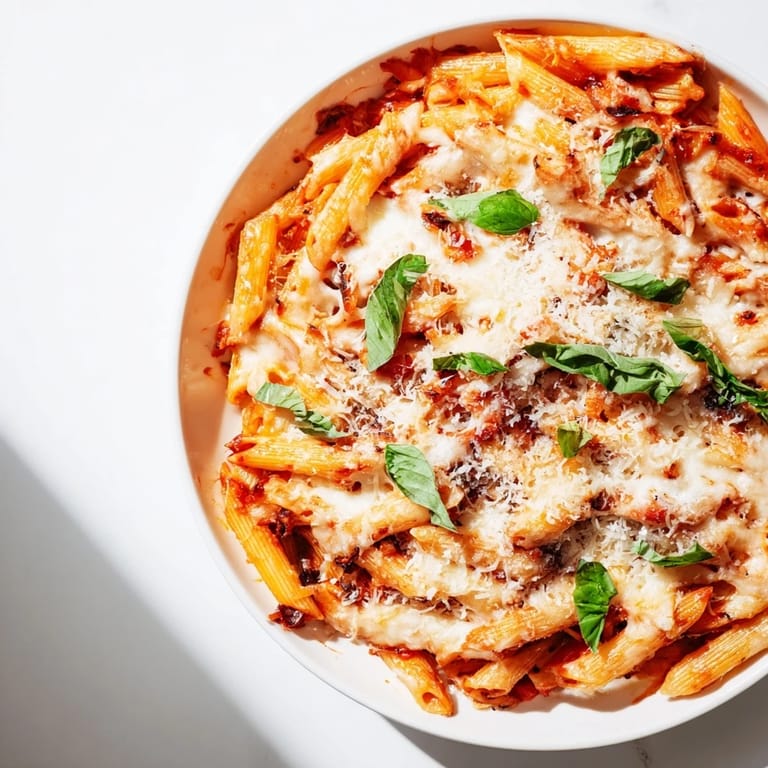
- Slide the dish into the oven for 18 to 20 minutes. You're looking for the cheese to turn golden brown and the sauce to bubble up around the edges. The smell will tell you when it's close.
- Rest and serve:
- Let it sit for 5 minutes so the sauce sets and won't run all over the plate. Tear a bit of fresh basil over the top, grab a spoon, and serve it while it's still steaming.
 Pin This
 Years ago, I made this without letting it rest, and the whole thing slid onto the plate in a hot puddle. Now I set a timer for five minutes and use that time to pour wine, light a candle, or just breathe. It's a small pause that makes everything taste better.
When to Reach for This Dish
This is the kind of thing you make on a Tuesday when everyone's tired and the kitchen needs warmth. It's not fancy enough to stress about, but it's satisfying enough that people remember it. I've learned to keep canned tomatoes and dried oregano on hand because once this is in your rotation, you'll make it more often than you expect.
Heat, Balanced Right
The beauty of arrabbiata is that the heat isn't aggressive; it sneaks up on you. The red pepper flakes infuse the oil at the beginning, so by the time you taste it, the spice has become part of the sauce rather than something that makes you cough. Start conservative and taste as you build the sauce. If you want more fire, the second teaspoon of pepper flakes will change the whole personality of the dish.
Make It Your Own
This recipe is a framework, not a rule book. I've made it with roasted red peppers stirred in, with sautéed mushrooms layered between the pasta, even with a handful of spinach wilted into the sauce. Each time it comes out different but somehow still itself. The core is solid enough to bend without breaking.
- If you find provolone or fontina instead of mozzarella, use it—both melt beautifully and add their own flavor.
- A handful of sautéed zucchini or bell peppers can be tucked into the layers without changing the basic magic.
- If you're cooking for someone who hates heat, dial back the pepper flakes to half a teaspoon and they'll still taste the richness of the sauce.
 Pin This
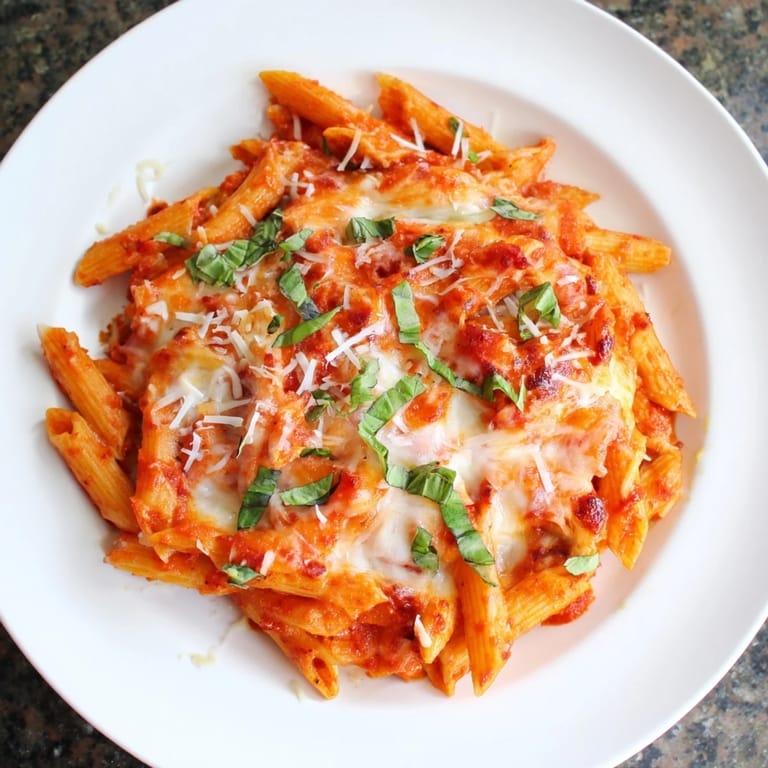
 This dish proves that some of the best meals come from simple ingredients and a willingness to do something slightly unexpected with them. Bake it, share it, let someone you care about smell the garlic and tomatoes while it cooks.
Recipe FAQ
- → How do I prevent the pasta from overcooking before baking?
Cook penne until just al dente, about 2 minutes less than package instructions, so it finishes cooking perfectly during baking.
- → Can I adjust the spiciness for a milder taste?
Yes, reduce the crushed red pepper flakes or omit them for a subtler heat, or increase them if you prefer extra spice.
- → What cheeses work best for layering in this dish?
Parmesan and mozzarella create a perfect balance of sharpness and meltiness, but you can substitute mozzarella with provolone or fontina.
- → Can vegetables be added to enrich this bake?
Sautéed peppers, mushrooms, or other vegetables can be mixed in for additional flavor and texture variations.
- → How should leftovers be stored and reheated?
Store in an airtight container in the refrigerator for up to 3 days. Reheat in the oven or microwave until warmed through.